
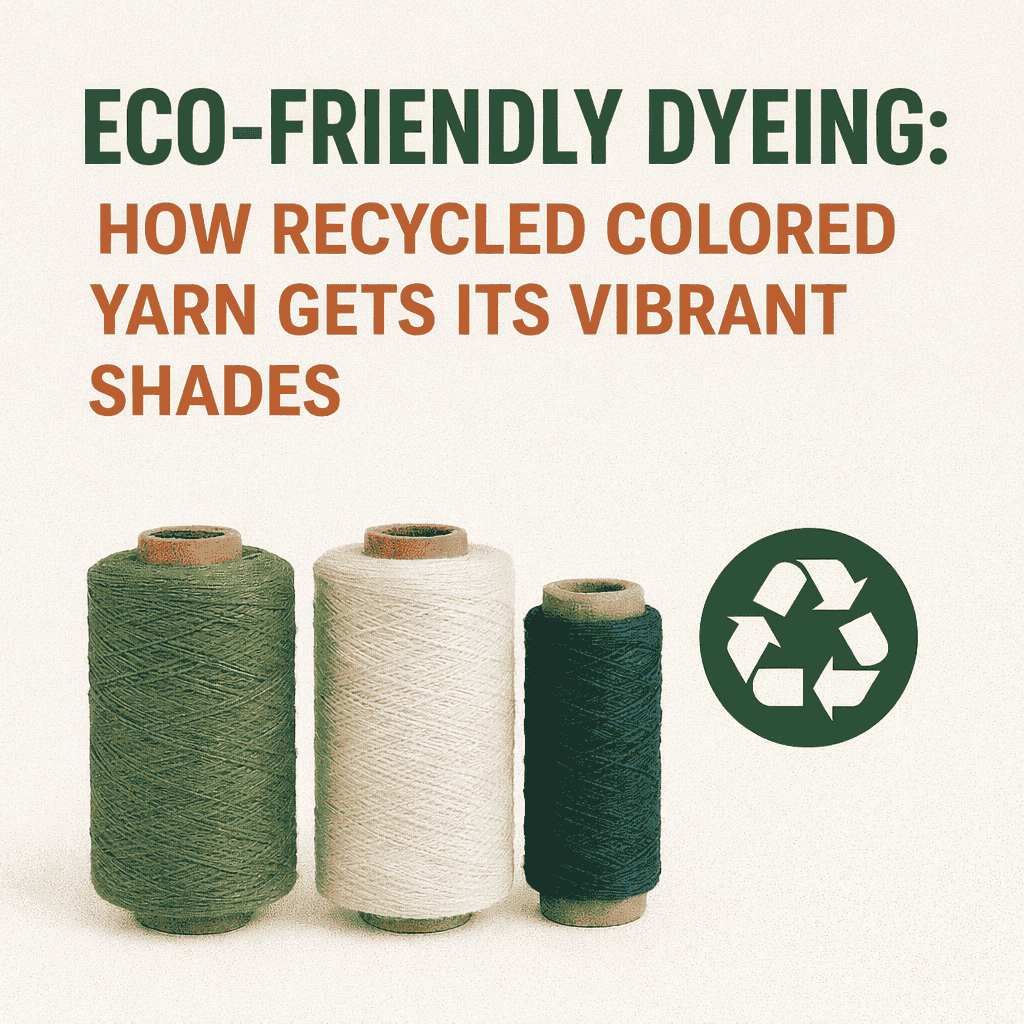
Eco-Friendly Dyeing: How Recycled Colored Yarn Gets Its Vibrant Shades
The textile industry is experiencing a major shift toward sustainability, and one of the most impactful innovations is the use of recycled colored yarn. Unlike conventional yarns that require intensive dyeing processes, recycled colored yarn offers vibrant shades while significantly reducing environmental impact. This eco-friendly approach is transforming how fashion and home textiles are produced. At the forefront of this movement is KS Spinning Mills, a trusted manufacturer committed to responsible and high-quality yarn production.
Understanding Recycled Colored Yarn
Recycled colored yarn is created by reprocessing pre-dyed textile waste or colored fibers into new yarn. Instead of dyeing fibers from scratch, manufacturers sort and blend already-colored materials, eliminating or reducing the need for traditional dyeing.
This method not only conserves water and energy but also reduces chemical usage. KS Spinning Mills focuses on precision and quality throughout this process to ensure recycled colored yarn delivers both sustainability and performance.
The Environmental Challenges of Traditional Dyeing
Conventional dyeing is one of the most resource-intensive stages in textile production. It requires large volumes of water, energy, and chemicals, often leading to wastewater pollution and high carbon emissions.
Many dyes contain substances that can harm ecosystems if not properly treated. As environmental regulations tighten and consumer awareness grows, textile manufacturers are seeking alternatives that minimize these risks. Recycled colored yarn offers a solution by drastically reducing reliance on conventional dyeing processes.
The Eco-Friendly Color Creation Process
1. Collection and Sorting of Colored Textile Waste
The journey of recycled colored yarn begins with the collection of textile waste. This waste includes pre-dyed fabric scraps and post-consumer garments.
At KS Spinning Mills, careful sorting is carried out based on color, fiber type, and quality. This step is crucial for achieving consistent shades and maintaining yarn performance.
2. Color Blending for Shade Accuracy
Once sorted, fibers of similar colors are blended to create specific shades. This blending process allows manufacturers to achieve a wide spectrum of colors without additional dyeing.
KS Spinning Mills uses advanced blending techniques to ensure color uniformity across batches. This precision is essential for fashion brands that demand consistent color reproduction.
3. Minimal or No Dyeing Requirement
Because recycled colored yarn relies on pre-dyed fibers, the need for dyeing is significantly reduced or eliminated. In some cases, light corrective dyeing may be used to fine-tune shades.
By minimizing dye usage, KS Spinning Mills reduces water consumption, energy use, and chemical discharge, making the process environmentally responsible.
Achieving Vibrant and Long-Lasting Shades
A common misconception is that Recycled Colored Yarn lacks vibrancy. In reality, modern recycling and blending techniques produce rich, long-lasting colors that meet industry standards.
KS Spinning Mills ensures that recycled colored yarn maintains excellent color fastness, resisting fading even after repeated washing and wear. This durability makes it suitable for both apparel and home textile applications.
Water and Energy Conservation Benefits
Eco-friendly dyeing through recycled colored yarn significantly lowers water and energy consumption. Traditional dyeing processes require multiple rinses and heating cycles, while recycled colored yarn bypasses most of these steps.
By reducing resource usage, KS Spinning Mills helps textile manufacturers lower their environmental footprint while maintaining production efficiency.
Reduced Chemical Usage and Pollution
Chemical dyes and auxiliary agents are a major source of textile pollution. Recycled colored yarn minimizes the need for these substances, reducing wastewater contamination.
KS Spinning Mills prioritizes responsible chemical management when minimal dyeing is required, ensuring compliance with environmental and safety standards.
Supporting Circular Economy Practices
Recycled colored yarn plays a vital role in circular economy models by extending the life cycle of textile materials. Instead of discarding colored fabrics, they are transformed into valuable yarn.
KS Spinning Mills actively supports circular textile production by converting waste into high-quality recycled yarn, helping brands achieve sustainability goals.
Meeting Fashion Industry Requirements
Fashion brands demand both sustainability and performance. Recycled colored yarn meets these expectations by offering consistent color, strength, and versatility.
KS Spinning Mills works closely with brands to supply recycled colored yarn suitable for various applications, including casual wear, activewear, denim, and home textiles.
Innovation and Technology at KS Spinning Mills
Advanced technology is key to producing high-quality recycled colored yarn. KS Spinning Mills invests in modern machinery, precise sorting systems, and strict quality control measures.
This commitment to innovation ensures that eco-friendly dyeing does not compromise on aesthetics or durability.
The Future of Eco-Friendly Dyeing
As sustainability becomes central to textile production, eco-friendly dyeing methods will continue to evolve. Recycled colored yarn is expected to play an increasingly important role in reducing the environmental impact of the fashion and textile industries.
With ongoing innovation and growing demand, manufacturers like KS Spinning Mills are shaping a future where vibrant colors and environmental responsibility go hand in hand.
Conclusion
Eco-friendly dyeing through recycled colored yarn represents a significant advancement in sustainable textile manufacturing. By minimizing water, energy, and chemical usage, this process delivers vibrant shades with a lower environmental footprint.
Through its commitment to quality, innovation, and sustainability, KS Spinning Mills demonstrates how recycled colored yarn can meet the aesthetic and performance demands of modern textiles while supporting a greener future. As the industry continues to evolve, eco-friendly dyeing will remain a cornerstone of responsible textile production.