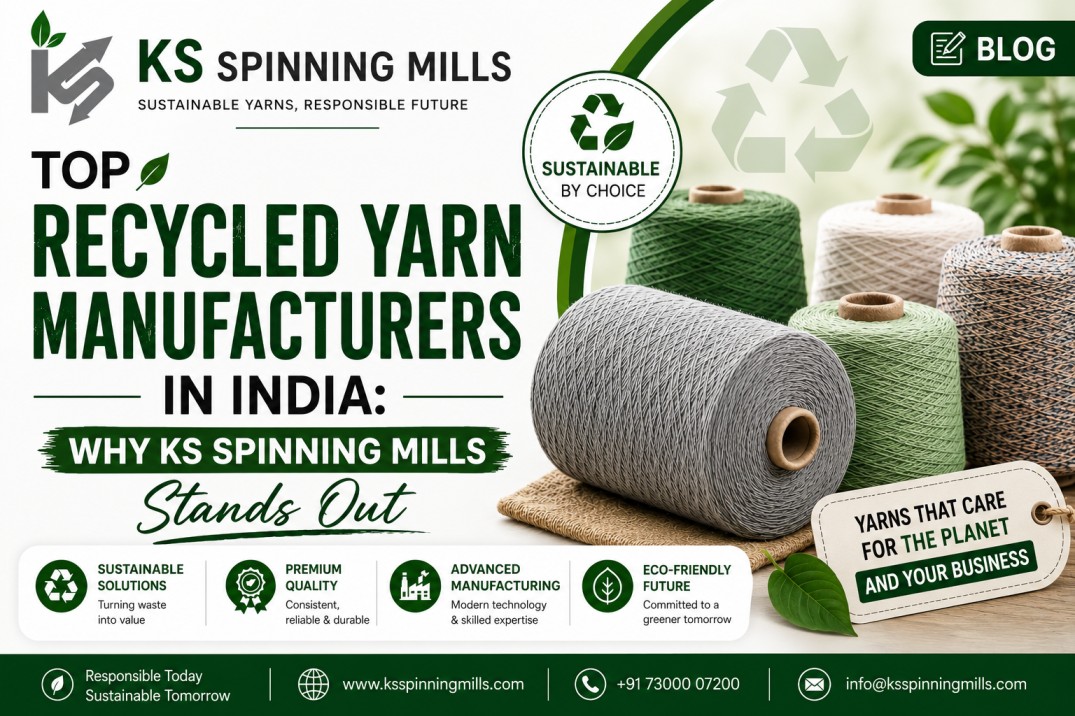
Top Recycled Yarn Manufacturers in India: Why KS Spinning Mills Stands Out

Top Recycled Yarn Manufacturers in India: Why KS Spinning Mills Stands Out

Top Recycled Yarn Manufacturers in India: Why KS Spinning Mills Stands Out

The textile industry is undergoing a major transformation as businesses, brands, and manufacturers increasingly focus on sustainability, resource efficiency, and responsible production. One of the most important developments in this shift is the growing demand for recycled yarn.

Recycled yarn is produced by processing textile waste, discarded fabrics, and other suitable materials into usable fibres that can be spun into new yarn. This approach helps reduce waste and supports the principles of a circular textile economy.

With the demand for sustainable textiles growing in India and international markets, choosing the right Recycled Yarn Manufacturer has become increasingly important. Manufacturers and buyers need suppliers that can deliver consistent quality, reliable production, suitable yarn specifications, and sustainable solutions.

Among the growing number of Recycled Yarn Manufacturers in India, KS Spinning Mills has established itself as a notable name for businesses looking for quality-focused and sustainability-oriented yarn solutions.

Growing Demand for Recycled Yarn in India

India has a strong textile and spinning industry, making it an important market for recycled yarn production. Garment manufacturers, fabric producers, home textile companies, fashion brands, and exporters are increasingly exploring recycled materials to meet changing consumer expectations.

Several factors are contributing to this growing demand:

  • Increasing focus on sustainable fashion
  • Growing awareness of textile waste
  • Demand for eco-friendly textile products
  • Greater emphasis on resource conservation
  • Changing requirements from international buyers
  • Growth of circular economy practices

As a result, recycled yarn manufacturers are playing an increasingly important role in helping textile businesses adopt more responsible production practices.

What Is Recycled Yarn?

Recycled yarn is yarn manufactured using recovered textile fibres or other recyclable materials instead of relying entirely on virgin raw materials.

Depending on the manufacturing process and raw material, recycled yarn can be used in various applications, including:

  • Apparel
  • Home textiles
  • Knitted fabrics
  • Woven fabrics
  • Fashion accessories
  • Industrial textiles
  • Blankets and furnishings

The characteristics of recycled yarn can vary depending on the source material, fibre composition, processing technology, and intended application.

For buyers, this makes selecting an experienced recycled yarn manufacturer in India particularly important.

Why Choose Recycled Yarn?

The primary advantage of recycled yarn is its role in creating a more resource-efficient textile manufacturing system.

1. Supports Sustainable Manufacturing

Recycled yarn enables textile businesses to incorporate recovered materials into their production processes. This can help companies develop products aligned with their sustainability objectives.

2. Helps Reduce Textile Waste

Textile waste is a significant challenge for the global fashion and textile industry. Recycling suitable textile materials can help divert some waste from disposal and return valuable fibres to the production cycle.

3. Supports Circular Textile Production

The circular economy focuses on keeping materials in use for as long as possible. Recycled yarn contributes to this approach by converting suitable discarded textile materials into new yarn.

4. Suitable for Multiple Applications

Depending on its composition and specifications, recycled yarn can be used across apparel, home textiles, knitting, weaving, and other textile applications.

How to Choose the Best Recycled Yarn Manufacturer in India

Choosing a manufacturer should involve more than simply comparing prices. Buyers should evaluate several important factors.

Quality and Consistency

Yarn quality directly affects fabric performance and production efficiency. A reliable manufacturer should maintain consistency across batches and meet agreed specifications.

Manufacturing Capabilities

The manufacturer’s spinning and processing capabilities should match the requirements of the buyer. Different applications may require different yarn counts, blends, compositions, and performance characteristics.

Raw Material Management

The quality of recycled yarn depends significantly on the quality and processing of its raw materials. Effective sourcing, sorting, processing, and fibre preparation are therefore essential.

Production Capacity

Large textile businesses often require continuous and dependable supply. Buyers should evaluate whether a manufacturer has the capacity to support their order volumes and delivery requirements.

Sustainability Approach

For companies purchasing recycled yarn as part of their sustainability strategy, it is important to understand the manufacturer’s approach to recycling, resource utilization, waste management, and responsible production.

Technical Support

A good yarn manufacturer should be able to understand the buyer’s requirements and recommend suitable yarn specifications for their intended application.

Why KS Spinning Mills Stands Out

KS Spinning Mills is positioned to serve the growing demand for recycled and sustainable yarn solutions in the textile industry.

For buyers searching for Recycled Yarn Manufacturers, the company can be considered based on key factors such as manufacturing expertise, product quality, consistency, and focus on evolving textile requirements.

Focus on Quality

Quality is one of the most important considerations when sourcing recycled yarn. Recycled materials can present unique processing challenges, making appropriate fibre preparation and spinning practices essential.

A quality-focused manufacturer works toward maintaining yarn characteristics that are suitable for the customer’s intended textile application.

Sustainable Yarn Solutions

KS Spinning Mills focuses on yarn solutions that support the growing movement toward more sustainable textile manufacturing.

For brands and textile manufacturers looking to incorporate recycled materials into their product lines, working with a specialized recycled yarn manufacturer can help them explore more responsible material options.

Understanding Textile Industry Requirements

Different buyers have different requirements. A garment manufacturer may require different yarn characteristics than a home textile producer or knitting manufacturer.

An experienced spinning mill can help buyers identify appropriate yarn solutions according to their application, production requirements, and specifications.

Reliable Manufacturing Partner

For bulk textile procurement, reliability is critical. Consistent product quality, production capability, communication, and timely supply can all influence a buyer’s overall manufacturing process.

This is why businesses should evaluate the overall capabilities of a manufacturer rather than making a decision based solely on price.

Applications of Recycled Yarn

Recycled yarn can be used in a wide range of textile products, depending on its fibre composition and specifications.

Common applications include:

Apparel: Recycled yarn can be incorporated into sustainable clothing and fashion products.

Knitted Fabrics: It can be used for various knitted textile applications where the yarn specification is suitable.

Home Textiles: Recycled yarn can contribute to products such as furnishings and other household textile products.

Woven Fabrics: Certain recycled yarns can be used for weaving applications based on required strength and construction.

Sustainable Fashion Products: Brands increasingly use recycled materials as part of collections designed around sustainability.

The Future of Recycled Yarn Manufacturing in India

The future of recycled yarn looks promising as textile manufacturers and brands continue exploring alternatives to conventional raw materials.

India’s established textile ecosystem, spinning expertise, manufacturing infrastructure, and growing sustainability awareness create opportunities for the recycled yarn sector.

At the same time, manufacturers will need to continue focusing on:

  • Consistent yarn quality
  • Advanced recycling and spinning technologies
  • Efficient raw material utilization
  • Sustainable manufacturing practices
  • Product innovation
  • International quality requirements

As demand for sustainable textiles continues to evolve, recycled yarn manufacturers in India are likely to become increasingly important suppliers for both domestic and international textile businesses.

Conclusion

The shift toward sustainable textile manufacturing is creating significant opportunities for recycled yarn. From reducing textile waste to supporting circular production models, recycled yarn offers textile manufacturers and brands an opportunity to explore more responsible material solutions.

However, selecting the right manufacturer is essential for achieving consistent quality, reliable supply, and suitable product performance.

KS Spinning Mills stands out as a company to consider for businesses searching for a dependable recycled yarn manufacturer in India. With a focus on quality, manufacturing capabilities, and sustainable yarn solutions, KS Spinning Mills can support textile businesses looking to explore recycled and eco-conscious yarn options.

If your business is looking for recycled yarn manufacturers in India, evaluating product specifications, quality standards, manufacturing capabilities, sustainability practices, and supply requirements can help you make a more informed sourcing decision.
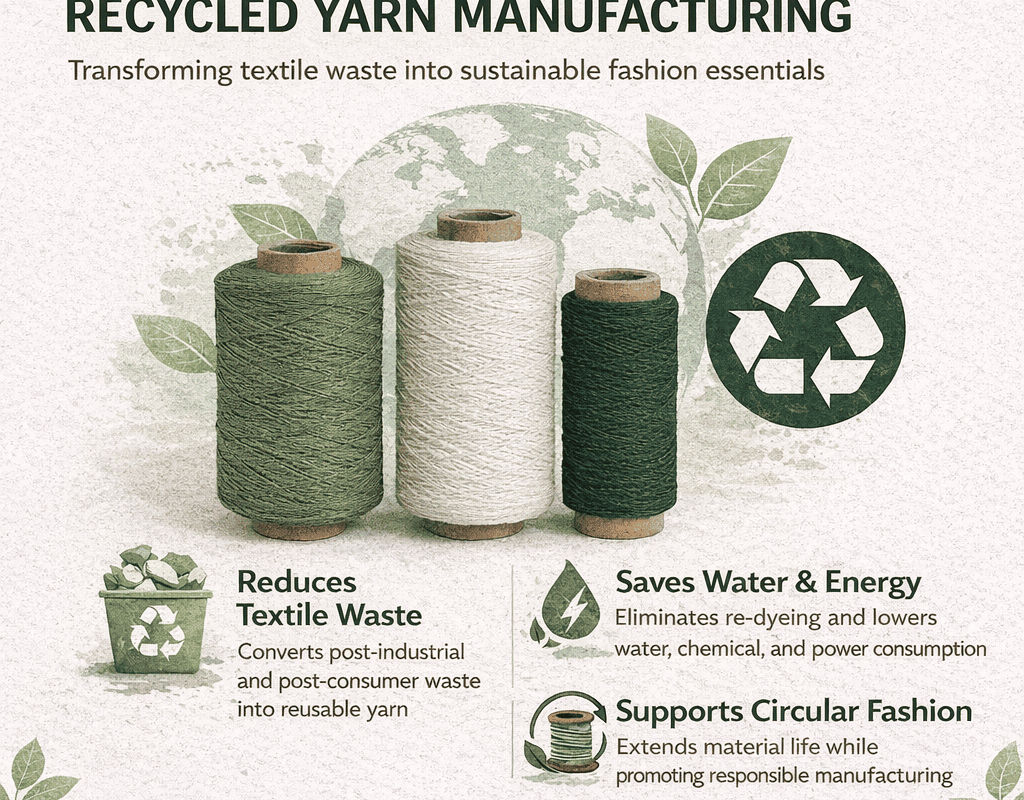
The Environmental Impact of Recycled Yarn Manufacturing

The Environmental Impact of Recycled Yarn Manufacturing

The Environmental Impact of Recycled Yarn Manufacturing

The textile industry plays a significant role in the global economy, but it also has a considerable environmental footprint. Traditional yarn manufacturing consumes large amounts of water, energy, and raw materials, contributing to pollution and waste. As sustainability becomes a priority, recycled yarn manufacturing has emerged as a powerful solution to reduce environmental impact while supporting responsible textile production. Companies like KS Spinning Mills are leading this transformation by adopting eco-friendly processes and innovative technologies.

Understanding Recycled Yarn Manufacturing

Recycled yarn is produced by converting textile waste or discarded materials into usable fibers that can be spun into yarn. These materials may include post-industrial waste, fabric scraps, or post-consumer textiles. By reusing existing resources, recycled yarn manufacturing minimizes waste and reduces the need for virgin raw materials.

KS Spinning Mills focuses on maintaining high-quality standards while ensuring that recycled yarn meets the performance requirements of modern textile applications.

Reducing Textile Waste and Landfill Pressure

One of the most significant environmental benefits of recycled yarn manufacturing is waste reduction. The textile industry generates millions of tons of waste annually, much of which ends up in landfills or incinerators.

Recycling textile waste into yarn extends the life cycle of materials and prevents them from contributing to environmental pollution. By repurposing waste fibers, manufacturers like KS Spinning Mills actively reduce landfill pressure and support sustainable waste management practices.

Conserving Natural Resources

Traditional yarn production relies heavily on virgin fibers such as cotton, which requires extensive water usage, pesticides, and land resources. Recycled Yarn Manufacturing significantly reduces dependence on these raw materials.

By utilizing recycled fibers, KS Spinning Mills helps conserve water, reduce agricultural strain, and minimize the extraction of natural resources. This conservation is essential for maintaining ecological balance and ensuring long-term resource availability.

Lower Water Consumption

Water usage is one of the most pressing environmental concerns in textile manufacturing. From fiber processing to dyeing, traditional yarn production consumes vast quantities of water.

Recycled yarn manufacturing typically requires less water, especially when fibers are reused rather than grown or chemically processed. KS Spinning Mills implements efficient processes that optimize water usage, contributing to a reduced environmental footprint.

Energy Efficiency and Reduced Carbon Emissions

Producing yarn from recycled fibers generally consumes less energy than manufacturing yarn from virgin materials. Lower energy usage directly translates into reduced greenhouse gas emissions.

By adopting energy-efficient machinery and streamlined production methods, KS Spinning Mills helps minimize carbon emissions. This approach aligns with global efforts to combat climate change and reduce the textile industry’s contribution to greenhouse gases.

Minimizing Chemical Usage

Traditional textile processing often involves heavy use of chemicals for cleaning, bleaching, and dyeing. Recycled yarn manufacturing can reduce chemical dependency by reusing fibers that have already undergone some level of processing.

KS Spinning Mills prioritizes responsible chemical management, ensuring that any necessary treatments meet environmental and safety standards. This reduces chemical runoff and protects surrounding ecosystems.

Supporting the Circular Economy

Recycled yarn manufacturing plays a vital role in promoting a circular economy, where materials are reused and recycled rather than discarded. This closed-loop system reduces waste and maximizes resource efficiency.

KS Spinning Mills contributes to circular textile practices by transforming waste into valuable yarn, enabling brands to create products with reduced environmental impact. This model supports sustainable growth across the textile value chain.

Enhancing Sustainable Supply Chains

Modern consumers demand transparency and sustainability throughout the supply chain. Recycled yarn manufacturing helps brands demonstrate environmental responsibility and meet sustainability goals.

By partnering with KS Spinning Mills, textile manufacturers gain access to eco-friendly yarn solutions that support responsible sourcing and production. This enhances brand credibility and market competitiveness.

Challenges in Recycled Yarn Manufacturing

Despite its benefits, recycled yarn manufacturing faces challenges such as maintaining fiber quality, ensuring consistency, and managing contamination in recycled materials. Advanced technology and strict quality control are essential to overcome these obstacles.

KS Spinning Mills addresses these challenges through continuous innovation, quality testing, and process optimization. This ensures recycled yarn performs reliably across various applications.

The Role of Innovation and Technology

Technological advancements are driving improvements in recycled yarn manufacturing. Modern sorting, processing, and spinning techniques have significantly enhanced yarn quality and efficiency.

KS Spinning Mills invests in advanced machinery and research to deliver recycled yarn that meets industry standards. Innovation ensures that sustainability does not come at the cost of performance or aesthetics.

Long-Term Environmental and Economic Benefits

Recycled yarn manufacturing offers long-term advantages beyond immediate environmental impact. Reduced resource consumption, lower energy usage, and waste reduction contribute to sustainable economic growth.

As regulations become stricter and consumer awareness increases, recycled yarn manufacturing will play a central role in shaping the future of textiles. Companies like KS Spinning Mills are well-positioned to lead this transition.

Conclusion

The environmental impact of recycled yarn manufacturing is profound and far-reaching. By reducing waste, conserving resources, lowering water and energy consumption, and supporting circular economies, recycled yarn offers a sustainable alternative to traditional yarn production.

Through responsible practices and innovative solutions, KS Spinning Mills demonstrates how recycled yarn manufacturing can balance environmental responsibility with high-quality textile production. As the industry moves toward a greener future, recycled yarn will continue to be a cornerstone of sustainable textile manufacturing.

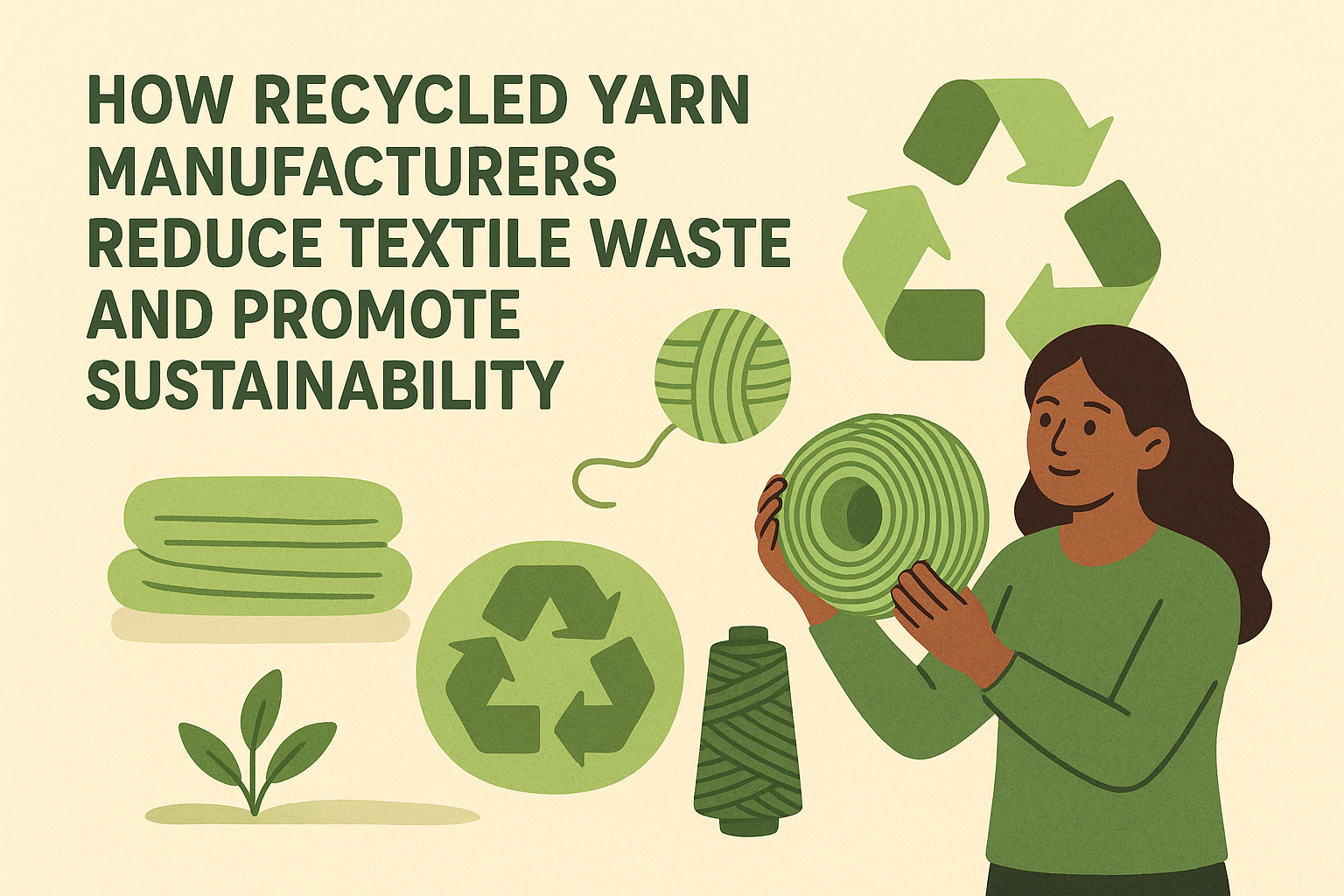
How Recycled Yarn Manufacturers Reduce Textile Waste and Promote Sustainability

How Recycled Yarn Manufacturers Reduce Textile Waste and Promote Sustainability

The fashion and textile industry is one of the largest contributors to global waste and pollution. From fast fashion’s rapid turnover to excessive production of synthetic fibers, the environmental impact is undeniable. However, one solution is gaining momentum and transforming the way fabrics are made, through Recycled Yarn Manufacturing.

Recycled yarn manufacturers are not only giving new life to discarded materials but also playing a critical role in reducing textile waste and promoting sustainability. By rethinking raw material sourcing, production processes, and waste management, they’re helping create a more circular, eco-friendly fashion ecosystem.

1. Understanding Recycled Yarn

Recycled yarn is produced from post-consumer and pre-consumer textile waste, as well as other recycled materials such as PET bottles.

  • Post-consumer waste: Old clothes, household textiles, or any fabric discarded after use.
  • Pre-consumer waste: Production offcuts, unsold inventory, and defective fabric rolls from manufacturing facilities.

Instead of these materials ending up in landfills or being incinerated, recycled yarn manufacturers collect, process, and convert them into usable fibers, which are then spun into new yarn.

2. The Process: From Waste to New Yarn

The manufacturing of recycled yarn involves several eco-conscious steps:

  1. Collection & Sorting – Textile waste is gathered from factories, retailers, and recycling centers. It is sorted based on fiber type, color, and quality.
  2. Shredding – Fabrics are mechanically shredded into smaller fiber pieces.
  3. Cleaning – Fibers are washed to remove contaminants like dust, dyes, or chemicals.
  4. Blending – Recycled fibers may be blended with virgin fibers for improved strength and texture.
  5. Spinning – The cleaned fibers are spun into yarn, ready for knitting or weaving.

This process bypasses many resource-heavy steps involved in producing virgin fibers, significantly cutting down environmental impact.

3. Reducing Textile Waste

One of the most significant contributions of recycled yarn manufacturers is diverting waste from landfills. According to the Ellen MacArthur Foundation, the equivalent of one garbage truck of textiles is landfilled or burned every second worldwide.

By reprocessing old fabrics into yarn, manufacturers help:

  • Extend the life of materials that would otherwise go to waste.
  • Minimize landfill accumulation, which reduces methane emissions from decomposing textiles.

Encourage circularity, where materials are continuously reused rather than discarded.

4. Promoting Sustainability Through Resource Conservation

Recycled yarn manufacturing is far less resource-intensive than producing new fibers.

  • Water Savings: Cotton production consumes huge amounts of water—recycling cotton fibers eliminates much of this demand.
  • Energy Reduction: Processing existing fibers uses less energy compared to manufacturing new polyester or other synthetics from raw petroleum.
  • Lower Carbon Footprint: Recycling reduces greenhouse gas emissions by avoiding virgin fiber production processes.

This conservation of natural resources makes recycled yarn an essential part of sustainable textile manufacturing.

5. Meeting Consumer Demand for Eco-Friendly Fashion

Today’s shoppers are more environmentally conscious than ever. They want brands that align with their values, and recycled yarn offers a compelling story.

Fashion labels using recycled yarn can proudly highlight:

  • Transparency in sourcing – clear traceability of recycled materials.
  • Lower environmental impact – backed by measurable data like water and energy savings.
  • Certifications – such as Global Recycled Standard (GRS) or OEKO-TEX, proving sustainable practices.

This not only boosts brand reputation but also fosters long-term customer loyalty.

6. Challenges and Solutions

While recycled yarn production offers numerous benefits, it also faces certain challenges:

  • Fiber Quality – Recycled fibers can be shorter and less durable. Solution: Blending with virgin fibers and improving mechanical/chemical recycling techniques.
  • Color Limitations – Pre-colored fibers can limit dyeing options. Solution: Advanced color-sorting technology and innovative dyeing methods.
  • Sorting Complexity – Mixed-fiber fabrics are harder to recycle. Solution: AI-driven fiber identification systems to improve sorting accuracy.

As technology advances, these challenges are becoming easier to overcome, making recycled yarn production more efficient and scalable.

7. Driving a Circular Fashion Economy

Recycled yarn manufacturing aligns perfectly with the circular economy—a system where products are designed, used, and recycled in a continuous loop.

Instead of a linear “take-make-dispose” model, circular fashion promotes designing for recyclability, ensuring that today’s clothes can become tomorrow’s raw materials. Recycled Yarn Manufacturers are key players in making this vision a reality.

Conclusion

Recycled Yarn Manufacturers are doing more than producing eco-friendly fibers—they’re reshaping the future of fashion. By reducing textile waste, conserving resources, and promoting sustainable practices, they help close the loop on fabric production.

As awareness grows and technology advances, recycled yarn will become a cornerstone of the textile industry. For fashion brands, adopting recycled yarn is no longer just a trend—it’s a responsibility. And for consumers, choosing products made from recycled yarn is a small but powerful step toward a cleaner, greener planet.

KS Spinning Mills: Setting New Standards Among Recycled Yarn Manufacturers Committed to Sustainability

KS Spinning Mills: Setting New Standards Among Recycled Yarn Manufacturers Committed to Sustainability

KS Spinning Mills: Setting New Standards Among Recycled Yarn Manufacturers Committed to Sustainability

In today’s fast-evolving textile industry, sustainability is no longer optional—it’s essential. At KS Spinning Mills, we understand the urgency to adopt eco-conscious practices, which is why we are proud to be among the leading Recycled Yarn Manufacturers dedicated to driving real change. By combining innovation with responsibility, we’re setting new standards in sustainable yarn production that benefit both our clients and the planet.

Why Recycled Yarn Matters

The global fashion and textile industries are under growing pressure to reduce waste, lower emissions, and conserve natural resources. Recycled yarn is a critical part of this shift. By transforming post-consumer and post-industrial textile waste into usable yarn, manufacturers can significantly cut down on environmental impact. As one of the forward-thinking Recycled Yarn Manufacturers, KS Spinning Mills plays a key role in this circular economy model.

Our recycled yarn is made using a meticulous process that ensures fiber integrity and product consistency. From sorting and cleaning to spinning and finishing, each step is optimized for sustainability without sacrificing quality. The result? Eco-friendly yarn that performs just as well as conventional alternatives—if not better.

What Sets KS Spinning Mills Apart?

  • Sustainability at Our Core

    We don’t just offer recycled yarn—we live and breathe sustainability. Every product we manufacture is a testament to our commitment to reducing textile waste, saving water, and minimizing our carbon footprint.

  • Premium Quality, Always

    As experienced Recycled Yarn Manufacturers, we know that quality matters. That’s why our yarns are rigorously tested for strength, colorfastness, and uniformity. Whether you’re weaving, knitting, or producing apparel, our yarns deliver consistent results every time.

  • Custom Solutions for Modern Manufacturers

    We offer a wide variety of recycled yarns in different blends, colors, and counts. Whether you need cotton, polyester, or blended yarns, we can customize our products to meet your exact specifications.

  • Ethical and Transparent Production

    At KS Spinning Mills, ethical practices are integral to our business. From fair labor to environmentally sound manufacturing, our operations reflect our values. Transparency is a priority—we provide full traceability for every order.

Partnering for a Greener Future

KS Spinning Mills collaborates with brands, designers, and manufacturers who share our commitment to sustainability. Our clients span across industries—from fashion and home textiles to industrial fabrics—proving that high-quality, recycled yarns are not only viable but essential in today’s market.

As the demand for responsible products continues to grow, partnering with trusted Recycled Yarn Manufacturers like KS Spinning Mills positions your business at the forefront of positive change.

Let’s Work Together

If you’re looking to reduce your environmental impact without compromising on quality, KS Spinning Mills is your ideal partner. Our recycled yarn solutions are engineered for performance, designed with purpose, and aligned with your sustainability goals.

📞 Phone: +91 95182-21098
📧 Email: sales@ksspinningmills.com
🌐 Website: KS Spinning Mills—where sustainability meets superior craftsmanship.