
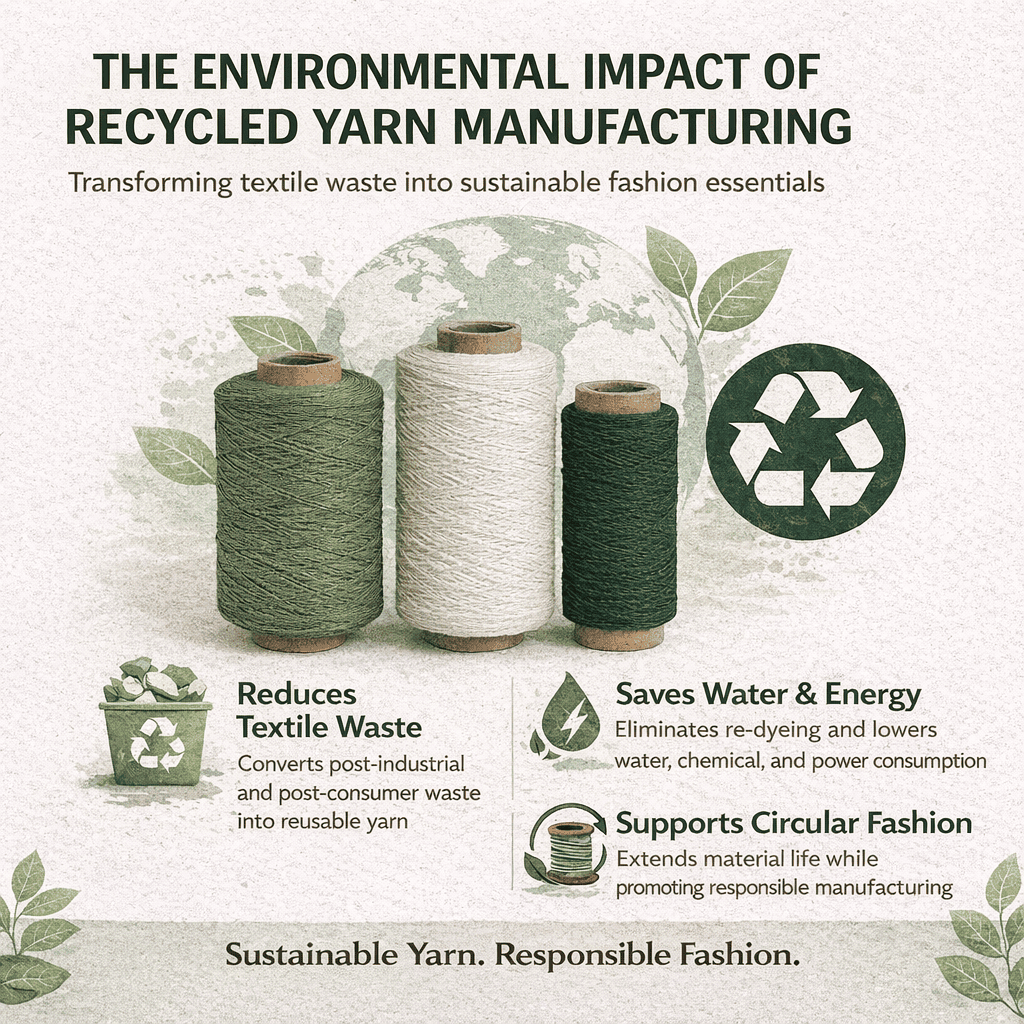
The Environmental Impact of Recycled Yarn Manufacturing
The textile industry plays a significant role in the global economy, but it also has a considerable environmental footprint. Traditional yarn manufacturing consumes large amounts of water, energy, and raw materials, contributing to pollution and waste. As sustainability becomes a priority, recycled yarn manufacturing has emerged as a powerful solution to reduce environmental impact while supporting responsible textile production. Companies like KS Spinning Mills are leading this transformation by adopting eco-friendly processes and innovative technologies.
Understanding Recycled Yarn Manufacturing
Recycled yarn is produced by converting textile waste or discarded materials into usable fibers that can be spun into yarn. These materials may include post-industrial waste, fabric scraps, or post-consumer textiles. By reusing existing resources, recycled yarn manufacturing minimizes waste and reduces the need for virgin raw materials.
KS Spinning Mills focuses on maintaining high-quality standards while ensuring that recycled yarn meets the performance requirements of modern textile applications.
Reducing Textile Waste and Landfill Pressure
One of the most significant environmental benefits of recycled yarn manufacturing is waste reduction. The textile industry generates millions of tons of waste annually, much of which ends up in landfills or incinerators.
Recycling textile waste into yarn extends the life cycle of materials and prevents them from contributing to environmental pollution. By repurposing waste fibers, manufacturers like KS Spinning Mills actively reduce landfill pressure and support sustainable waste management practices.
Conserving Natural Resources
Traditional yarn production relies heavily on virgin fibers such as cotton, which requires extensive water usage, pesticides, and land resources. Recycled Yarn Manufacturing significantly reduces dependence on these raw materials.
By utilizing recycled fibers, KS Spinning Mills helps conserve water, reduce agricultural strain, and minimize the extraction of natural resources. This conservation is essential for maintaining ecological balance and ensuring long-term resource availability.
Lower Water Consumption
Water usage is one of the most pressing environmental concerns in textile manufacturing. From fiber processing to dyeing, traditional yarn production consumes vast quantities of water.
Recycled yarn manufacturing typically requires less water, especially when fibers are reused rather than grown or chemically processed. KS Spinning Mills implements efficient processes that optimize water usage, contributing to a reduced environmental footprint.
Energy Efficiency and Reduced Carbon Emissions
Producing yarn from recycled fibers generally consumes less energy than manufacturing yarn from virgin materials. Lower energy usage directly translates into reduced greenhouse gas emissions.
By adopting energy-efficient machinery and streamlined production methods, KS Spinning Mills helps minimize carbon emissions. This approach aligns with global efforts to combat climate change and reduce the textile industry’s contribution to greenhouse gases.
Minimizing Chemical Usage
Traditional textile processing often involves heavy use of chemicals for cleaning, bleaching, and dyeing. Recycled yarn manufacturing can reduce chemical dependency by reusing fibers that have already undergone some level of processing.
KS Spinning Mills prioritizes responsible chemical management, ensuring that any necessary treatments meet environmental and safety standards. This reduces chemical runoff and protects surrounding ecosystems.
Supporting the Circular Economy
Recycled yarn manufacturing plays a vital role in promoting a circular economy, where materials are reused and recycled rather than discarded. This closed-loop system reduces waste and maximizes resource efficiency.
KS Spinning Mills contributes to circular textile practices by transforming waste into valuable yarn, enabling brands to create products with reduced environmental impact. This model supports sustainable growth across the textile value chain.
Enhancing Sustainable Supply Chains
Modern consumers demand transparency and sustainability throughout the supply chain. Recycled yarn manufacturing helps brands demonstrate environmental responsibility and meet sustainability goals.
By partnering with KS Spinning Mills, textile manufacturers gain access to eco-friendly yarn solutions that support responsible sourcing and production. This enhances brand credibility and market competitiveness.
Challenges in Recycled Yarn Manufacturing
Despite its benefits, recycled yarn manufacturing faces challenges such as maintaining fiber quality, ensuring consistency, and managing contamination in recycled materials. Advanced technology and strict quality control are essential to overcome these obstacles.
KS Spinning Mills addresses these challenges through continuous innovation, quality testing, and process optimization. This ensures recycled yarn performs reliably across various applications.
The Role of Innovation and Technology
Technological advancements are driving improvements in recycled yarn manufacturing. Modern sorting, processing, and spinning techniques have significantly enhanced yarn quality and efficiency.
KS Spinning Mills invests in advanced machinery and research to deliver recycled yarn that meets industry standards. Innovation ensures that sustainability does not come at the cost of performance or aesthetics.
Long-Term Environmental and Economic Benefits
Recycled yarn manufacturing offers long-term advantages beyond immediate environmental impact. Reduced resource consumption, lower energy usage, and waste reduction contribute to sustainable economic growth.
As regulations become stricter and consumer awareness increases, recycled yarn manufacturing will play a central role in shaping the future of textiles. Companies like KS Spinning Mills are well-positioned to lead this transition.
Conclusion
The environmental impact of recycled yarn manufacturing is profound and far-reaching. By reducing waste, conserving resources, lowering water and energy consumption, and supporting circular economies, recycled yarn offers a sustainable alternative to traditional yarn production.
Through responsible practices and innovative solutions, KS Spinning Mills demonstrates how recycled yarn manufacturing can balance environmental responsibility with high-quality textile production. As the industry moves toward a greener future, recycled yarn will continue to be a cornerstone of sustainable textile manufacturing.