Creative Uses for Recycled Weaving Yarn in Home and Apparel Textiles

Creative Uses for Recycled Weaving Yarn in Home and Apparel Textiles

Creative Uses for Recycled Weaving Yarn in Home and Apparel Textiles

Sustainability is no longer a trend—it has become a defining principle of the modern textile industry. As manufacturers and consumers alike seek eco-friendly alternatives, recycled weaving yarn has emerged as a versatile and innovative solution. By transforming textile waste into high-quality yarn, recycled weaving yarn supports responsible production while offering endless creative possibilities in both home and apparel textiles. At the forefront of this movement is KS Spinning Mills, a trusted name in sustainable yarn manufacturing.

Understanding Recycled Weaving Yarn

Recycled weaving yarn is produced by reprocessing post-industrial or post-consumer textile waste into usable fibers that can be spun into yarn. These yarns are designed to meet the performance requirements of weaving applications while significantly reducing environmental impact.

Modern advancements in recycling and spinning technology have improved yarn strength, consistency, and appearance, making recycled weaving yarn suitable for a wide range of creative textile applications. KS Spinning Mills focuses on delivering recycled yarn that balances sustainability with quality and durability.

The Growing Demand for Sustainable Textiles

Rising awareness of environmental issues has reshaped consumer expectations. Today’s buyers actively look for products made with recycled materials and sustainable practices. Textile brands are responding by incorporating recycled yarns into their collections, not only to reduce their carbon footprint but also to tell a compelling sustainability story.

Recycled weaving yarn allows manufacturers to align with global sustainability goals while maintaining design flexibility. This shift is driving innovation across home furnishings, fashion, and lifestyle products.

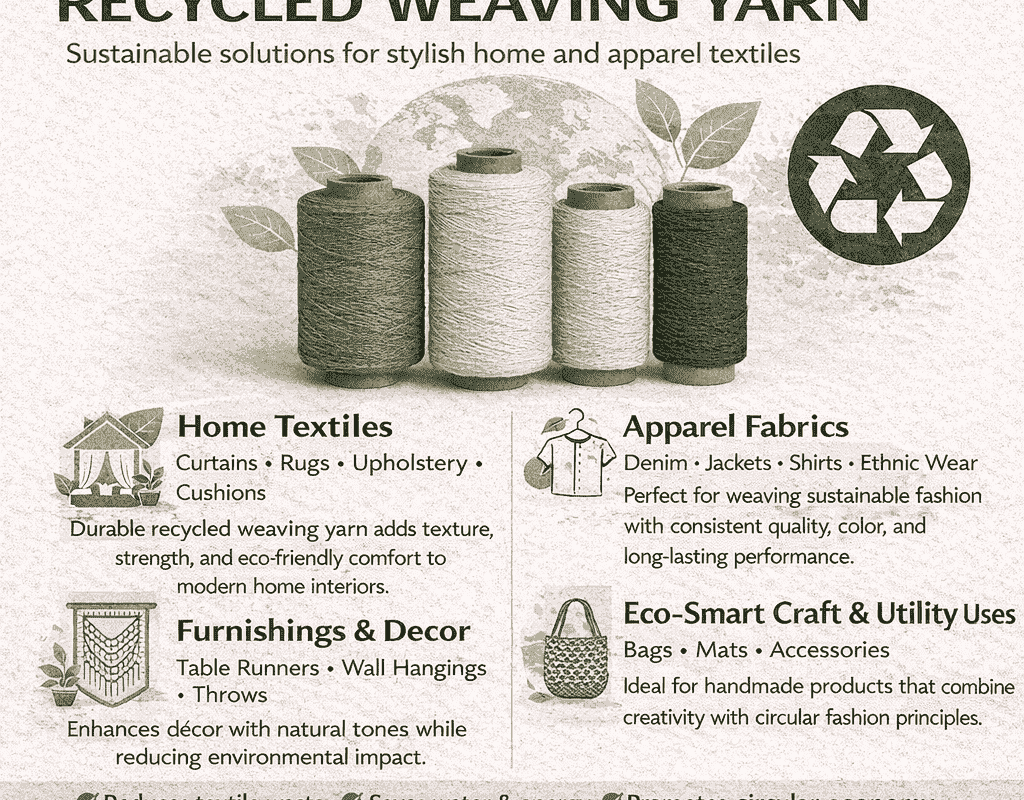
Creative Applications in Home Textiles

1. Upholstery Fabrics

Recycled weaving yarn is increasingly used in upholstery fabrics for sofas, chairs, and cushions. Its durability and strength make it ideal for high-use applications, while textured finishes add a modern aesthetic.

KS Spinning Mills supplies recycled weaving yarn that supports long-lasting upholstery solutions, helping furniture manufacturers create stylish and sustainable products.

2. Curtains and Drapery

Lightweight and medium-weight recycled yarns are well-suited for curtains and drapery. They offer excellent drape, breathability, and color retention, making them both functional and visually appealing.

Using recycled weaving yarn in window furnishings helps reduce environmental impact while enhancing interior design with contemporary textures and patterns.

3. Rugs and Floor Coverings

Handwoven and machine-woven rugs made from Recycled Weaving Yarn are gaining popularity for their durability and eco-friendly appeal. These rugs combine strength with unique textures, making them ideal for residential and commercial spaces.

KS Spinning Mills ensures consistent yarn quality to support uniform weaving and long-lasting performance in floor coverings.

4. Bedding and Soft Furnishings

Recycled weaving yarn is also used in bedspreads, throws, cushion covers, and table linens. These products benefit from the yarn’s softness, breathability, and resilience, offering comfort without compromising sustainability.

Innovative Uses in Apparel Textiles

5. Casual Wear and Everyday Apparel

Recycled weaving yarn is widely used in shirts, dresses, trousers, and casual wear fabrics. With improved softness and uniformity, these yarns allow designers to create comfortable garments suitable for everyday use.

KS Spinning Mills works closely with apparel manufacturers to supply yarns that meet fashion industry standards while supporting sustainable production.

6. Denim and Structured Fabrics

Denim is one of the most resource-intensive textiles, making it an ideal candidate for recycled yarn integration. Recycled weaving yarn can be blended into denim fabrics to reduce water and energy consumption while maintaining durability.

This creative use supports eco-conscious fashion without compromising the iconic strength of denim.

7. Workwear and Utility Clothing

Recycled weaving yarn is also suitable for workwear fabrics that require strength and abrasion resistance. From uniforms to utility garments, recycled yarn contributes to long-lasting textiles that meet functional demands.

KS Spinning Mills provides yarn solutions that balance performance and sustainability for industrial and workwear applications.

8. Accessories and Lifestyle Products

Accessories such as bags, scarves, belts, and caps are perfect for showcasing Recycled Weaving Yarn. These products highlight texture, craftsmanship, and sustainability, appealing to environmentally conscious consumers.

Design Freedom and Aesthetic Versatility

One of the biggest advantages of recycled weaving yarn is its design flexibility. It can be produced in various counts, textures, and colors, enabling designers to experiment with patterns, finishes, and fabric weights.

KS Spinning Mills invests in advanced processing techniques to ensure recycled yarn meets aesthetic expectations while maintaining consistent quality.

Sustainability Benefits Beyond Aesthetics

Using recycled weaving yarn offers multiple environmental advantages, including:

  • Reduced textile waste in landfills
  • Lower water and energy consumption
  • Reduced reliance on virgin raw materials
  • Support for circular economy initiatives

These benefits make recycled weaving yarn a responsible choice for brands seeking long-term sustainability.

The Role of KS Spinning Mills in Sustainable Innovation

As a leading yarn manufacturer, KS Spinning Mills plays a key role in promoting recycled weaving yarn across home and apparel textiles. The company combines responsible sourcing, advanced technology, and quality assurance to deliver yarn solutions that meet evolving market demands.

By focusing on innovation and sustainability, KS Spinning Mills helps textile manufacturers transform creative ideas into high-quality, eco-friendly products.

Future Trends in Recycled Weaving Yarn

The future of recycled weaving yarn lies in continuous innovation. As technology improves, recycled yarns will offer even greater consistency, softness, and performance. Designers and manufacturers will continue exploring new applications, blending sustainability with creativity.

With increasing consumer demand and regulatory support, recycled weaving yarn is set to become a standard material in textile production.

Conclusion

Recycled weaving yarn opens up a world of creative possibilities in both home and apparel textiles. From upholstery and rugs to casual wear and accessories, its versatility, durability, and sustainability make it an ideal choice for modern textile manufacturing.

By partnering with trusted manufacturers like KS Spinning Mills, brands can embrace sustainable innovation without compromising on quality or design. As the textile industry evolves, recycled weaving yarn will remain a powerful tool for creating responsible, stylish, and future-ready textiles.
What Is Recycled Weaving Yarn? A Complete Beginner’s Guide for 2025

What Is Recycled Weaving Yarn? A Complete Beginner’s Guide for 2025

As the world shifts towards smarter, greener textile solutions, the popularity of Recycled Weaving Yarn has skyrocketed—especially among mills, fabric manufacturers, fashion brands, and sustainability-driven consumers. If you’re new to the concept and searching for a simple, beginner-friendly explanation, this guide breaks down everything you need to know in 2025.

What Is Recycled Weaving Yarn?

Recycled weaving yarn is yarn produced from post-consumer or post-industrial textile waste, plastic bottles, cutting scraps, PET waste, and leftover fiber materials. Instead of letting these materials end up in landfills or oceans, recycling mills collect, process, and spin them into new, high-quality yarns—perfect for weaving fabrics.

In short:

✔️ It reduces waste
✔️ It saves natural resources
✔️ It lowers energy consumption
✔️ It supports circular textiles

This makes recycled weaving yarn one of the fastest-growing eco-friendly yarn categories in 2025.

How Recycled Weaving Yarn Is Made

The recycling and spinning process is a combination of technology, precision, and quality control. Here’s how it works step-by-step:

1. Waste Collection

Manufacturers collect:

  • Post-consumer garments
  • Cutting waste from factories
  • PET bottles (for polyester yarns)
  • Discarded home textiles
  • Industrial scraps

2. Sorting & Cleaning

Waste is segregated by:

  • Fiber type
  • Color
  • Quality
  • Contamination levels

This step ensures consistent yarn quality.

3. Shredding

Textiles are shredded into fiber form using high-speed mechanical shredders.

4. Fiber Opening

Fibers are opened, blended, and aligned to create a uniform texture.

5. Carding & Combing

These processes remove impurities and prepare the fiber into slivers for spinning.

6. Spinning into Yarn

Modern ring frames or open-end spinning machines convert fiber into smooth, strong yarn suitable for weaving.

7. Quality Testing

Every batch undergoes:

  • Strength tests
  • Evenness checks
  • Color consistency checks
  • Contamination analysis

8. Final Packaging

The yarn is wound into cones, bales, or customized packaging for mills and exporters.

Types of Recycled Weaving Yarn Available in 2025

The textile industry now offers multiple variants to match fabric needs:

1. Recycled Cotton Weaving Yarn

Made from cotton garment waste and industry scraps.
Ideal for: shirting fabrics, denim blends, bedsheets, towels, and upholstery.

2. Recycled Polyester Weaving Yarn (rPET)

Made from PET bottles and polyester waste.
Ideal for: performance fabrics, denim blends, bags, curtains, and technical textiles.

3. Recycled Cotton-Polyester Blended Yarn

A perfect balance of softness + strength.
Ideal for: home textiles, fashion fabrics, and value-added woven fabrics.

4. Recycled Acrylic & Wool Blends

Used in blankets, shawls, winter fabrics, and upholstery.

5. Color-Sorted Recycled Yarn

Produced without additional dyeing—reducing water usage by up to 90%.

Why Recycled Weaving Yarn Is in High Demand in 2025

The global textile industry is prioritizing sustainability more than ever. Here’s why Recycled Weaving Yarn has become essential:

1. It Reduces Textile Waste

Over 92 million tons of textile waste is generated each year globally. Recycling turns waste into usable raw material—reducing landfill pressure.

2. It Lowers Cost for Manufacturers

Recycled yarns often cost 20%–40% less than virgin yarn due to:

  • Reduced raw material costs
  • Less water and energy usage
  • Eliminated dyeing in color-sorted yarns

3. It Saves Water & Energy

Recycling cotton saves up to:

  • 85% water
  • 60% energy
  • 40% CO₂ emissions

This makes it a smart choice for eco-conscious brands.

4. It Supports Sustainable Certifications

Brands aim for:

  • GRS (Global Recycled Standard)
  • RCS
  • OEKO-TEX
  • IDFL certifications

Using recycled weaving yarn helps achieve these sustainability goals.

5. Consumer Demand Is Rising

Gen-Z and international fashion brands prefer products that:

  • Reduce carbon footprint
  • Use circular textile materials
  • Follow ethical production

This trend boosts demand for recycled yarn every year.

Applications of Recycled Weaving Yarn

Recycled weaving yarn is extremely versatile and can be used in almost every textile category:

1. Home Textiles

  • Bedsheets
  • Pillow fabrics
  • Curtains
  • Blankets
  • Table linens
  • Upholstery

2. Fashion & Apparel

  • Shirts
  • Trousers
  • Denim
  • Jackets
  • Ethnic wear
  • Accessories

3. Industrial & Technical Textiles

  • Interlinings
  • Lining fabrics
  • Geo-textiles
  • Filtration fabrics
  • Workwear

4. Eco-Friendly Product Manufacturing

  • Bags
  • Towels
  • Rugs
  • Handlooms
  • Craft fabrics

In 2025, weaving mills globally are shifting their raw material sourcing toward recycled yarn due to cost advantages and sustainability benefits.

Advantages of Using Recycled Weaving Yarn

1. Cost-Effective

Budget-friendly for bulk manufacturers without compromising on fabric quality.

2. Eco-Friendly

Less water, less energy, and fewer chemicals.

3. Durable & Versatile

Modern recycling technology ensures high strength and evenness.

4. Reduced Carbon Footprint

Perfect for sustainable collections and green-certified products.

5. Available in Multiple Counts

From coarse denims to fine shirting, recycled yarns now support a wide variety of weaving counts.

Challenges in Recycled Weaving Yarn (And How Mills Are Solving Them)

1. Fiber Length Variation

Recycling may shorten fibers.
Solution: Advanced carding & combing systems generate uniform fibers.

2. Color Variation

Especially in color-sorted yarn.
Solution: AI-based color sorting & blending.

3. Contamination

Plastic, metal, and micro-waste can enter during shredding.
Solution: Automated contamination detection systems.

4. Limited Availability of Premium Waste

High global demand is increasing raw material scarcity.
Solution: More collection points and post-consumer garment recycling programs.

In 2025, spinning mills using advanced machinery have largely overcome these issues.

How to Choose the Best Recycled Weaving Yarn in 2025

If you’re sourcing recycled weaving yarn, consider:

✔️ Count range (Ne or Denier)
✔️ Fiber composition (cotton, polyester, blends)
✔️ Certifications (GRS, RCS, IDFL)
✔️ Color consistency
✔️ Yarn strength & evenness
✔️ Application suitability (home textiles, apparel, industrial use)
✔️ Manufacturer reputation

Choosing a trusted spinning mill ensures better and consistent output for weaving.

The Future of Recycled Weaving Yarn

2025 marks a major shift in global textile sourcing. Recycled weaving yarn is no longer an optional trend—it is becoming a global manufacturing standard.

Future innovations include:

  • AI-based waste sorting
  • Zero-dye yarn production
  • Fully circular textile-to-textile systems
  • Biodegradable recycled blends
  • Higher-strength recycled fibers for technical textiles

The industry is moving toward 100% recyclable and reusable textiles, and recycled weaving yarn is leading this transformation.

Conclusion

Recycled weaving yarn is a powerful solution for reducing waste, lowering production costs, and supporting sustainable textile manufacturing. As we move into 2025 and beyond, brands, mills, exporters, and buyers are increasingly prioritizing recycled materials due to their environmental and economic benefits.

If you’re beginning your journey into eco-friendly textile manufacturing, recycled weaving yarn is the perfect place to start.

Why Choosing an IDFL Certified Yarn Manufacturer Matters for Sustainable Fashion

Why Choosing an IDFL Certified Yarn Manufacturer Matters for Sustainable Fashion

In the modern textile industry, sustainability is no longer a choice—it’s a responsibility. With global fashion brands and conscious consumers demanding greater accountability, manufacturers are turning to certified practices that prove their commitment to environmental and ethical production. One such globally recognized standard is IDFL certification.

For companies like KS Spinning Mills, being an IDFL Certified Yarn Manufacturer is more than a badge of honor—it’s a testament to our dedication to creating high-quality, eco-friendly yarns that support a sustainable fashion ecosystem.

In this blog, we’ll explore what IDFL certification means, why it’s crucial for the fashion industry, and how choosing an IDFL Certified Yarn Manufacturer can make a meaningful difference for the planet and your brand.

What is IDFL Certification?

IDFL (International Down and Feather Laboratory and Institute) is one of the world’s leading certification bodies for textile and apparel quality assurance. Established in 1978, IDFL has grown to certify a wide range of textile materials including yarns, fabrics, recycled fibers, and apparel components.

When a yarn manufacturer like KS Spinning Mills becomes IDFL Certified, it means our products have been tested and verified according to strict international standards of:

  • Sustainability and traceability
  • Fiber content authenticity
  • Recycled material verification
  • Quality consistency and durability
  • Ethical and environmentally responsible production

In essence, IDFL certification ensures that every spool of yarn you use contributes to a cleaner, safer, and more transparent textile supply chain.

The Need for Sustainability in Fashion

The global fashion industry is one of the largest contributors to environmental pollution. From water contamination and microplastic release to textile waste and carbon emissions, the impact is staggering.

Consumers are becoming increasingly aware of these challenges, and brands are under pressure to deliver sustainable, traceable, and ethical products.

That’s where certified yarn manufacturers come in. Choosing yarns that are produced in compliance with international sustainability standards—like those verified by IDFL—helps ensure that the foundation of every garment is eco-friendly from the start.

Sustainability begins at the yarn stage, and KS Spinning Mills plays a vital role in this transformation.

Why IDFL Certification Matters in Yarn Manufacturing

Let’s dive into why IDFL certification is so valuable and what makes it a trusted mark for sustainable yarns.

1. Verified Recycled Content

With the rise of circular fashion, recycled yarns have become essential for reducing textile waste. IDFL verifies the authenticity of recycled materials used in yarn production—ensuring that claims like “100% recycled yarn” are genuine and traceable.

At KS Spinning Mills, we use post-consumer and post-industrial textile waste to create high-quality recycled yarn fabrics, certified and approved by IDFL standards. This reduces the need for virgin raw materials and minimizes environmental impact.

2. Transparency and Traceability

Transparency is the cornerstone of sustainable manufacturing. IDFL-certified yarn manufacturers follow strict traceability protocols—tracking every stage of production, from raw material sourcing to final packaging.

By partnering with KS Spinning Mills, brands can confidently showcase their supply chain transparency, knowing their yarns are traceable, ethically sourced, and verified by a globally recognized body.

3. Consistent Quality Assurance

Sustainability is not just about being eco-friendly; it’s also about longevity and durability. IDFL ensures that certified yarns maintain consistent strength, texture, and performance quality—helping brands produce garments that last longer and reduce waste over time.

Our state-of-the-art spinning technology at KS Spinning Mills ensures every yarn meets the same high standard of quality and sustainability.

4. Global Credibility and Compliance

IDFL certification is globally recognized by textile buyers, importers, and sustainable fashion brands. Choosing an IDFL Certified Yarn Manufacturer like KS Spinning Mills provides your brand with international credibility and aligns your products with global sustainability benchmarks such as GOTS, GRS, and OEKO-TEX.

This not only enhances your brand image but also simplifies export approvals and client audits—saving both time and resources.

5. Supporting the Circular Economy

An IDFL Certified Yarn Manufacturer actively contributes to the circular textile economy—an approach focused on minimizing waste and reusing materials.

At KS Spinning Mills, we take discarded fabrics, leftover cotton, and industrial textile waste, and spin them into new, high-performance yarns. This process reduces landfill waste, conserves natural resources, and closes the loop on textile production.

The KS Spinning Mills Advantage

As an IDFL Certified Yarn Manufacturer, KS Spinning Mills stands at the forefront of the sustainable textile movement. Our commitment goes beyond certification—it’s a continuous pursuit of innovation, responsibility, and transparency.

Here’s what makes us stand out:

  • Eco-Friendly Manufacturing: We use renewable energy sources and water-efficient systems.
  • Certified Quality: Our yarns are tested and verified under IDFL and other international standards.
  • Recycled Yarn Expertise: We specialize in producing recycled and blended yarns without compromising quality.
  • Client-Centric Solutions: We customize yarns based on our partners’ specific sustainability goals.
  • Global Partnerships: Our yarns are trusted by leading textile and apparel brands worldwide.

By choosing KS Spinning Mills, you’re not just selecting a supplier—you’re partnering with a sustainability-driven manufacturer that values the planet as much as performance.

How Brands Benefit from Choosing an IDFL Certified Manufacturer

Partnering with an IDFL Certified Yarn Manufacturer like KS Spinning Mills brings tangible benefits for your brand:

  1. Enhanced Brand Credibility: Certification builds trust among eco-conscious consumers.
  2. Sustainable Product Claims: Confidently market your garments as certified sustainable.
  3. Regulatory Compliance: Meet international sustainability requirements easily.
  4. Improved Supply Chain Transparency: Showcase your brand’s ethical sourcing practices.
  5. Positive Environmental Impact: Reduce waste, carbon footprint, and pollution.

In a competitive market where consumers are willing to pay more for sustainable fashion, IDFL certification becomes a strategic advantage that boosts brand reputation and customer loyalty.

Conclusion: Sustainability Begins with Certified Yarns

Sustainable fashion is built from the ground up—and it all starts with the yarn. By choosing an IDFL Certified Yarn Manufacturer like KS Spinning Mills, brands ensure that every thread woven into their fabrics reflects integrity, responsibility, and environmental consciousness.

At KS Spinning Mills, we believe that the future of textiles lies in transparent, certified, and circular production. Together, we can redefine fashion—making it more sustainable, ethical, and future-ready.

KS Spinning Mills: Leading the Charge in Sustainable Yarn Manufacturing

KS Spinning Mills: Leading the Charge in Sustainable Yarn Manufacturing

The textile industry, known for its significant environmental footprint, is undergoing a major transformation, and Sustainable Yarn Manufacturing is at the forefront of this change. As consumers and businesses alike demand more eco-friendly products, manufacturers are stepping up to meet the challenge. KS Spinning Mills, a prominent name in the industry, has been playing a key role in producing sustainable yarns through the use of innovative technologies and eco-conscious practices. In this blog, we explore the Top 10 Sustainable Yarn Manufacturers that are leading the way in transforming the textile sector with their eco-friendly approaches, and we’ll also highlight how KS Spinning Mills is contributing to this movement.

1. KS Spinning Mills: Innovating for a Sustainable Future

As a trailblazer in sustainable yarn manufacturing, KS Spinning Mills has committed itself to integrating eco-friendly practices at every level of production. From sourcing organic cotton to utilizing recycled polyester yarns made from post-consumer waste, the company has taken significant steps toward reducing the environmental impact of its products.

In addition to sourcing sustainable fibers, KS Spinning Mills has adopted water-saving technologies and energy-efficient systems, reducing the carbon footprint of its production process. The company also uses eco-friendly dyes that require less water and fewer chemicals, further enhancing the sustainability of its yarn production.

By focusing on recycling and closing the loop in production processes, KS Spinning Mills ensures that materials are repurposed rather than discarded, contributing to a more sustainable and circular economy. This holistic approach places them at the forefront of sustainable yarn manufacturing and showcases their commitment to eco-conscious business practices.

2. Bertozzi

Bertozzi is an Italian company that has been gaining recognition for its sustainable yarn production. The company specializes in producing yarns from post-consumer waste, including plastic bottles and other recyclable materials. They have pioneered the use of recycled polyester yarns, which help reduce the need for virgin plastic production and keep plastic waste out of landfills.

Bertozzi is also known for its innovative methods of blending recycled fibers with natural fibers, creating yarns that are not only eco-friendly but also soft, durable, and suitable for high-end fashion and interior textiles. By embracing sustainable materials and reducing waste, Bertozzi is setting a high standard for environmentally responsible yarn production.

3. Lenzing

An industry leader in sustainable fiber production, Lenzing is famous for its flagship brand, TENCEL™. Made from sustainably sourced wood pulp, TENCEL™ is a fiber produced through a closed-loop process, ensuring that water and chemicals used in production are recycled, minimizing waste. Lenzing’s commitment to sustainability extends to its production facilities, which are powered by renewable energy and strive to achieve zero emissions.

Lenzing’s focus on biodegradable fibers sets them apart from traditional synthetic yarn manufacturers, making them a key player in the sustainable yarn market. Their fibers are known for their softness, durability, and minimal environmental impact, making them popular choices for high-end fashion brands and home textiles.

4. Patagonia

While Patagonia is primarily known as an outdoor apparel company, it has been a key player in the sustainable yarn manufacturing space. The brand’s commitment to recycled materials extends to its yarn production, where they use recycled polyester made from post-consumer plastic bottles. Patagonia’s dedication to sustainability goes beyond the yarn itself, as the company also ensures ethical labor practices and environmental responsibility throughout its entire supply chain.

Patagonia’s focus on transparency and environmental activism has made them a role model for companies looking to integrate sustainability into every aspect of their business, from product design to packaging and beyond.

5. Ecolana

Ecolana is a Swedish company dedicated to producing yarns from 100% recycled fibers, including textile waste and PET plastic bottles. By focusing on circular economy principles, Ecolana minimizes the need for virgin materials and repurposes discarded textiles into high-quality yarns.

Their closed-loop production system ensures that waste is minimized at every stage of production, and their focus on upcycling ensures that textile waste is given a second life. Ecolana’s products have found success in both fashion and interior design, proving that sustainability and style can go hand in hand.

6. Tencel™ by Lenzing

In addition to their flagship TENCEL™ brand, Lenzing has expanded its sustainable fiber offerings, including TENCEL™ Lyocell and TENCEL™ Modal. These fibers are made from sustainably sourced wood and are produced through a process that uses closed-loop technology, where chemicals and water are continually recycled.

The fibers are also biodegradable, which means they break down naturally at the end of their lifecycle, reducing their impact on the environment. Tencel™ fibers are widely used in fashion, especially in high-end apparel and activewear, due to their softness, breathability, and sustainability.

7. Texollini

A pioneer in sustainable textiles, Texollini is known for its eco-friendly yarn production. Based in California, the company produces sustainable fabrics made from organic cotton and recycled polyester. Texollini is committed to reducing environmental impacts through its use of sustainable yarns, energy-efficient manufacturing processes, and eco-friendly dyes.

The company’s innovative approaches also include the use of digital printing technology, which significantly reduces water and energy consumption compared to traditional printing methods. Texollini has earned a strong reputation for offering high-quality, sustainable fabrics that are widely used in the fashion industry.

8. Unifi, Inc.

Unifi, Inc. is an American company that is a leading producer of recycled yarns and fibers. Their brand, Repreve, is one of the most well-known names in the recycled fiber industry. Repreve yarns are made from post-consumer waste, such as recycled PET plastic bottles, and are used in a variety of applications, including fashion, sportswear, and automotive textiles.

Unifi has made significant strides in creating a circular supply chain, where materials are continuously recycled, reducing the need for new raw materials and minimizing waste. By promoting sustainable practices across its entire operation, Unifi is helping lead the charge toward a more eco-friendly textile industry.

9. H&M Group (Conscious Collection)

The H&M Group, a global leader in fast fashion, has made significant commitments to sustainable yarn production, particularly through its Conscious Collection. The collection features products made from organic cotton, recycled polyester, and other sustainable materials, and the company has set ambitious goals to increase the proportion of sustainably sourced materials in its overall production.

H&M works closely with yarn manufacturers that use eco-friendly fibers and ensures that their suppliers adhere to strict sustainability and ethical standards. The company’s commitment to sustainable yarn production is part of its broader efforts to reduce its environmental impact and move toward a circular economy.

10. Fair Indigo

Fair Indigo is a fashion brand that focuses on fair trade and sustainable yarn production. Their yarns are sourced from certified organic cotton and other eco-friendly materials, ensuring that the fibers are produced without harmful chemicals and pesticides. Fair Indigo works with artisans in fair trade cooperatives and offers a line of products made with ethically sourced sustainable yarns.

The company’s commitment to sustainability extends to every aspect of its business, including packaging and waste reduction, making it an example of how brands can integrate eco-friendly practices into their entire operation.

Conclusion: KS Spinning Mills and the Future of Sustainable Yarn Manufacturing

The Sustainable Yarn Manufacturing industry is evolving rapidly, and companies like KS Spinning Mills are leading the way in integrating innovative technologies and sustainable practices. From recycled polyester to organic cotton, the future of yarn production lies in reducing waste, conserving resources, and creating products that have a minimal environmental impact.

As we’ve seen with industry leaders such as Lenzing, Patagonia, and Unifi, sustainability is no longer an afterthought but a core business strategy. For KS Spinning Mills, the future is about continuing to push the envelope by adopting the latest technologies and sustainable materials, all while maintaining a commitment to ethical production practices and reducing their environmental footprint.

As consumer demand for sustainable textiles grows, companies that embrace sustainability as a core value, like KS Spinning Mills, will continue to lead the charge toward a more eco-friendly, ethical, and circular textile industry.