
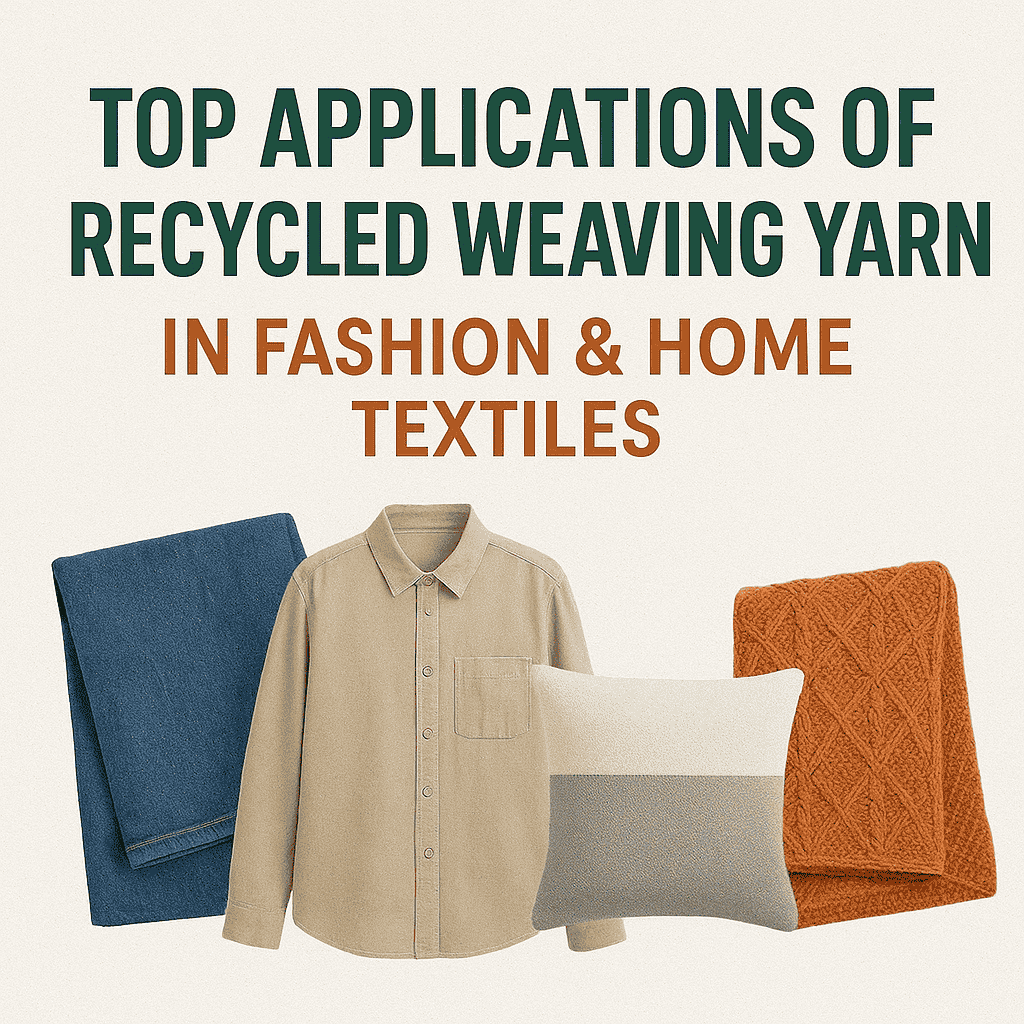
Top Applications of Recycled Weaving Yarn in Fashion & Home Textiles
As global demand for sustainable materials continues to grow, recycled weaving yarn has emerged as a game-changer for both the fashion and home textile industries. Brands, manufacturers, and designers are increasingly turning to recycled yarns not only to reduce environmental impact but also to unlock creative possibilities that were previously limited by traditional yarn types.
Recycled weaving yarn, produced from textile waste, industrial scraps, and post-consumer materials like PET bottles or old garments, is now considered one of the fastest-growing sustainable raw materials worldwide. Its ability to combine durability, aesthetics, and eco-responsibility has expanded its applications across diverse textile categories.
This article explores the top applications of recycled weaving yarn in fashion and home textiles, along with insights on why industries are embracing it in 2025 and beyond.
Why Recycled Weaving Yarn Is Rising in Popularity
Before diving into the applications, it’s important to understand why recycled yarns are becoming essential:
- Reduced environmental footprint compared to virgin yarn
- Lower water and energy consumption
- Decreased landfill waste through fiber recovery
- Improved technology & better-quality recycled fibers
- High demand from sustainable fashion brands
- Consumer preference for eco-friendly products
With all these advantages, recycled weaving yarn has become suitable for numerous textile categories — from everyday clothing to premium interior décor.
Top Applications of Recycled Weaving Yarn in Fashion
1. Apparel Fabrics for Sustainable Clothing Lines
One of the largest and fastest-growing applications of recycled weaving yarn is fashion apparel fabrics. Brands are adopting recycled yarns to make:
- Shirts
- Dresses
- Trousers
- Blouses
- Ethnic wear
- Casualwear & streetwear
- Outerwear shells
Recycled yarn-based woven fabrics offer excellent breathability, durability, and texture. With advanced spinning and blending technologies, manufacturers now create smooth, soft fabrics with high strength — making recycled yarns ideal for everyday fashion collections.
Why brands choose recycled yarns for apparel:
✔ Lower carbon footprint
✔ Soft texture comparable to virgin fibers
✔ Stylish natural heathered look
✔ Suitable for dyeing and printing
✔ Works well in blends (cotton + polyester + recycled fibers)
2. Denim & Bottomwear Fabrics
The denim industry is one of the biggest adopters of recycled yarn because:
- It reduces cotton usage (which requires huge amounts of water).
- It offers the same rugged feel as virgin denim yarn.
- Recycled PET blends increase tensile strength.
Manufacturers now weave denim made from:
- Recycled cotton
- Recycled polyester
- Post-consumer jeans
This helps brands reduce waste while creating modern, eco-friendly jeans, skirts, shorts, and jackets.
3. Eco-Friendly Sportswear & Athleisure
Sportswear requires strong, flexible, breathable fabrics — and recycled yarns meet these requirements through engineered blends.
Recycled polyester made from PET bottles is widely used to weave:
- Track pants
- Joggers
- Sports shorts
- Lightweight jackets
- Athleisure tops
These fabrics offer:
- High moisture-wicking properties
- Strength and durability
- Stretch (when blended with elastane)
Recycled weaving yarn allows brands to produce activewear with minimal environmental harm while maintaining performance.
4. Sustainable Fashion Accessories
Recycled weaving yarn is also used in accessories like:
- Scarves
- Stoles
- Bags
- Caps
- Belts
- Wallets
The textured, natural look of recycled fibers gives accessories a unique aesthetic appeal. Brands that focus on handcrafted or artisanal collections especially benefit from using recycled yarn due to its organic, eco-conscious story.
Top Applications of Recycled Weaving Yarn in Home Textiles
5. Upholstery Fabrics
One of the strongest applications in home textiles is upholstery. Recycled yarn-based woven fabrics are widely used for:
- Sofas
- Cushions
- Chairs
- Ottomans
These fabrics are engineered to provide:
- High durability
- Abrasion resistance
- Resistance to fading
- Aesthetic grain and texture
Recycled polyester and recycled cotton blends offer premium performance at a reduced environmental cost — making them ideal for furniture manufacturers.
6. Curtains & Draperies
Recycled weaving yarn is perfect for woven curtains and drapes due to its:
- Soft fall
- Smooth texture
- Light-blocking capability (when blended right)
- Ability to hold vibrant dyes
Home décor brands increasingly specify recycled yarn blends in their eco-friendly interior collections to appeal to conscious homeowners.
7. Bed Linens & Bedroom Textiles
Recycled cotton and blended recycled fibers are becoming popular for:
- Bedsheets
- Pillow covers
- Comforters
- Blankets
These fabrics offer:
- Breathability
- Softness
- Hypoallergenic properties
- High durability
Premium hotel suppliers also prefer recycled-based fabrics to meet global sustainability certifications.
8. Rugs, Carpets & Floor Textiles
Floor textiles require tough woven structures — something recycled yarns excel at, especially recycled polyester and nylon blends.
Applications include:
- Area rugs
- Door mats
- Floor runners
- Carpet tiles
These fabrics withstand heavy foot traffic while showcasing beautiful patterns and textures.
9. Table Linen & Dining Textiles
Recycled yarn is increasingly used in woven:
- Table mats
- Tablecloths
- Runners
- Napkins
These products benefit from:
- Easy washability
- Stain resistance (in polyester blends)
- Fabric longevity
This category is popular among eco-conscious restaurants and home décor brands.
Emerging Applications in 2025 & Beyond
As recycling technologies evolve, several new applications are growing rapidly:
10. Industrial & Technical Textiles
Recycled yarn is now entering sectors like:
- Automotive interiors
- Seat belts
- Industrial filters
- Protective fabrics
- Reinforcement fabrics
Its strength, durability, and cost-efficiency make it ideal for large-scale industrial use.
11. Luxury Textiles
Premium brands are experimenting with:
- Recycled silk blends
- Recycled fine cotton
- Recycled wool
This segment is expected to boom as top fashion houses focus on circular materials.
12. Zero-Waste Home Textile Collections
Manufacturers are developing entire décor lines using recycled yarns, offering:
- Coordinated cushion + curtain + upholstery sets
- Sustainable bedding bundles
- Recycled fiber décor accessories
These collections appeal strongly to modern consumers seeking eco-friendly homes.
Why Recycled Weaving Yarn Will Dominate Future Textiles
Across all fashion and home textile categories, the shift to recycled yarns is driven by:
- Environmental responsibility
- International sustainability certifications (GRS, RCS)
- Brand commitments to circularity
- Growing consumer awareness
- Government regulations on waste management
With rising concerns about textile waste and climate impact, the demand for recycled weaving yarn will continue to surge — making it the backbone of future textile innovation.
Final Thoughts
Recycled weaving yarn is no longer an alternative — it is becoming the standard for sustainable textile manufacturing. From fashion garments and accessories to upholstery, bedding, and industrial textiles, its applications are expanding faster than ever.
Brands that embrace recycled weaving yarn today not only reduce their environmental footprint but also future-proof their products for a market that increasingly values sustainability.