
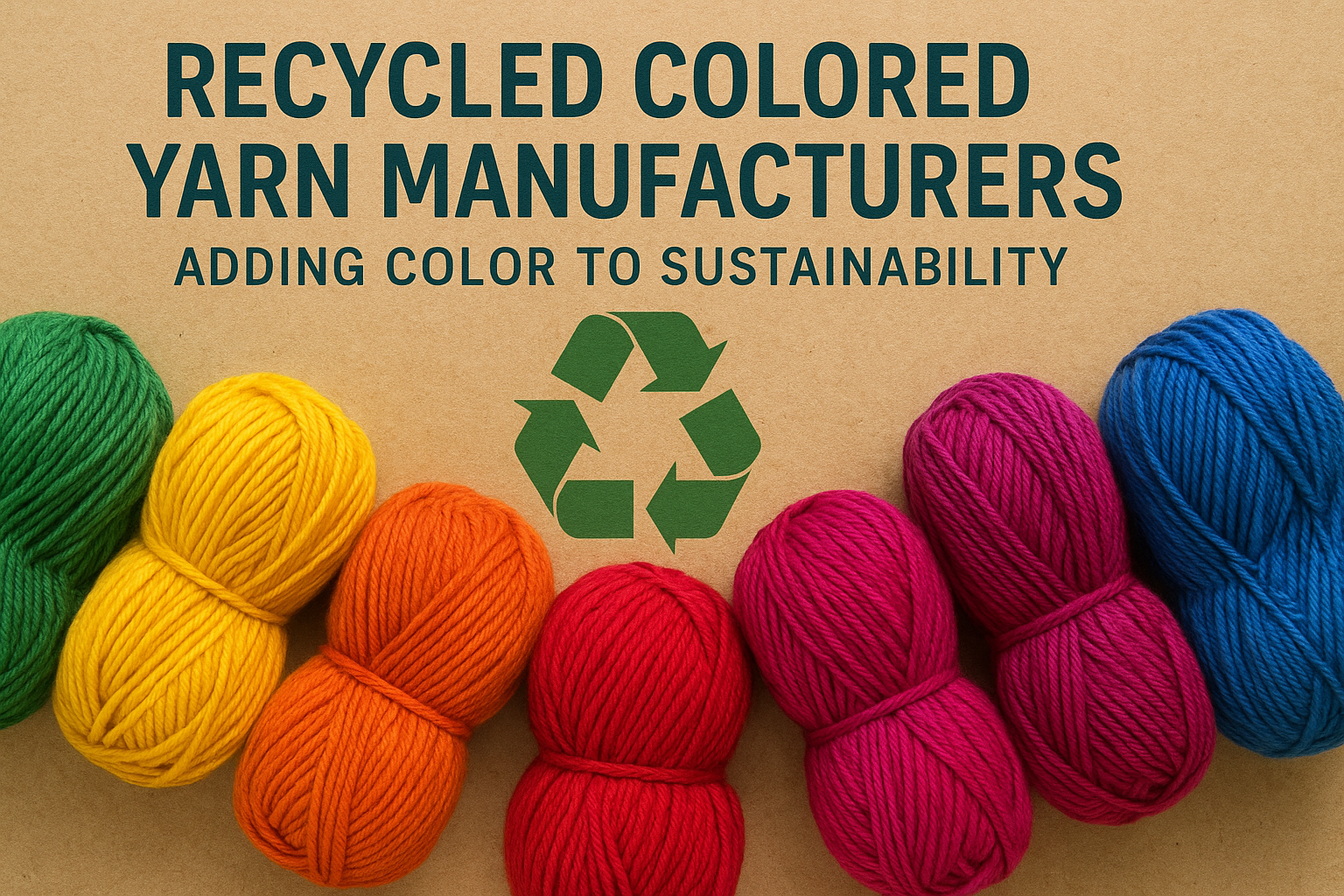
In today’s fast-paced fashion and textile industry, the conversation around sustainability is no longer optional — it’s essential. Among the most impactful innovations in this space is Recycled Colored Yarn Manufacturing, a process that combines eco-conscious production with vibrant, high-quality colors. These manufacturers are not just producing yarn; they are redefining how the industry approaches waste, resources, and creativity.
What Is Recycled Colored Yarn?
Recycled colored yarn is produced using pre-consumer and post-consumer textile waste, such as discarded garments, fabric scraps, and leftover industrial materials. Instead of dyeing new fibers, these materials are sorted by color during the recycling process, allowing manufacturers to produce yarn in various shades without the need for additional chemical dyes.
This approach significantly reduces water usage, chemical waste, and energy consumption — three major environmental concerns in traditional textile dyeing.
The Environmental Benefits
The biggest advantage of recycled colored yarn manufacturing lies in its drastic reduction in environmental impact. Here’s how it makes a difference:
- No Extra Dyeing Needed
Traditional dyeing consumes massive amounts of water and introduces harmful chemicals into rivers and soil. By using pre-colored textile waste, manufacturers eliminate or minimize this step entirely. - Lower Carbon Footprint
Since the process avoids energy-intensive dye baths, recycled colored yarn production has a significantly smaller carbon footprint. - Reduced Landfill Waste
Every kilogram of recycled yarn means less textile waste dumped in landfills, extending the lifecycle of fabrics that would otherwise be discarded.
Water Conservation
Conventional textile dyeing can use up to 200 liters of water for every kilogram of fabric. Recycled colored yarn production uses a fraction of that amount, making it a more water-responsible choice.
The Process Behind Recycled Colored Yarn
The journey from discarded textiles to vibrant, eco-friendly yarn involves several steps:
- Collection & Sorting
Textile waste is collected from factories, garment brands, and recycling centers. Skilled workers or automated systems sort them by color and fabric type. - Shredding & Fiber Extraction
The textiles are mechanically shredded into smaller pieces, and fibers are separated from other materials like zippers, buttons, and elastic. - Blending for Strength & Color
The fibers are blended to ensure durability and evenness of color. Sometimes, a small amount of virgin fiber is added to improve the yarn’s strength. - Spinning into Yarn
The blended fibers are spun into yarn using advanced machinery, resulting in threads that are ready for weaving, knitting, or other textile applications.
Quality Checks
Each batch undergoes strict testing to ensure colorfastness, strength, and consistency — so the final product is both sustainable and high-quality.
Applications in Fashion & Beyond
Recycled colored yarn is versatile, making it a favorite in multiple industries:
- Fashion & Apparel – Sweaters, t-shirts, scarves, and hats.
- Home Textiles – Carpets, cushion covers, and throws.
- Industrial Uses – Upholstery fabrics, automotive interiors, and promotional merchandise.
Designers love recycled colored yarn because it allows them to maintain aesthetic variety without compromising environmental responsibility.
Why Brands Are Switching to Recycled Colored Yarn
As consumers become more eco-conscious, brands are under pressure to meet sustainability goals while keeping products appealing and marketable. Recycled Colored Yarn Offers:
- Cost Efficiency – Lower energy and water costs compared to traditional production.
- Authentic Sustainability Story – Brands can market products with genuine eco-friendly credentials.
Unique Aesthetics – Natural color variations create a distinctive, “earthy” look that resonates with sustainable fashion trends.
Challenges in the Industry
Despite its benefits, recycled colored yarn manufacturing faces challenges:
- Quality Consistency – Variations in textile waste quality can affect yarn strength and texture.
- Supply Chain Limitations – A steady supply of sorted textile waste is necessary for consistent production.
- Consumer Awareness – Many buyers are still unaware of the environmental benefits of recycled yarn, requiring education and marketing.
The Future of Recycled Colored Yarn
With advancements in recycling technology, fiber recovery, and automated sorting, the quality of recycled colored yarn is improving rapidly. The trend is supported by global sustainability movements, government regulations, and rising consumer demand for greener products.
In the coming years, we can expect:
- Wider Color Ranges – Improved sorting methods will allow for more vibrant, precise shades.
- Higher Fiber Quality – Blending techniques will reduce the need for virgin fibers.
- Mainstream Adoption – Large-scale fashion houses and retailers integrating recycled colored yarn into their core collections.
Conclusion
Recycled Colored Yarn Manufacturers are proving that sustainability doesn’t have to mean sacrificing beauty or quality. By turning textile waste into colorful, versatile yarn, they are breathing new life into discarded fabrics while protecting natural resources.
In a world where the fashion industry is often criticized for its environmental footprint, these manufacturers are adding color to sustainability — one vibrant, recycled thread at a time.