The Environmental Impact of Recycled Yarn Manufacturing

The Environmental Impact of Recycled Yarn Manufacturing

The Environmental Impact of Recycled Yarn Manufacturing

The textile industry plays a significant role in the global economy, but it also has a considerable environmental footprint. Traditional yarn manufacturing consumes large amounts of water, energy, and raw materials, contributing to pollution and waste. As sustainability becomes a priority, recycled yarn manufacturing has emerged as a powerful solution to reduce environmental impact while supporting responsible textile production. Companies like KS Spinning Mills are leading this transformation by adopting eco-friendly processes and innovative technologies.

Understanding Recycled Yarn Manufacturing

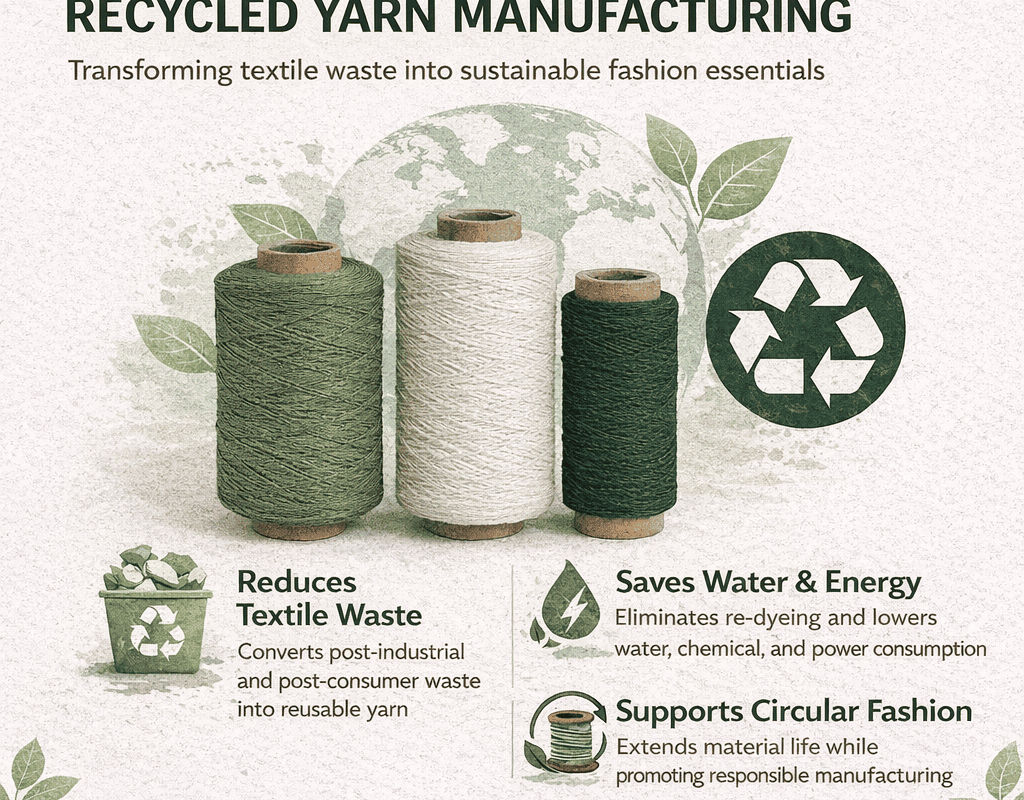
Recycled yarn is produced by converting textile waste or discarded materials into usable fibers that can be spun into yarn. These materials may include post-industrial waste, fabric scraps, or post-consumer textiles. By reusing existing resources, recycled yarn manufacturing minimizes waste and reduces the need for virgin raw materials.

KS Spinning Mills focuses on maintaining high-quality standards while ensuring that recycled yarn meets the performance requirements of modern textile applications.

Reducing Textile Waste and Landfill Pressure

One of the most significant environmental benefits of recycled yarn manufacturing is waste reduction. The textile industry generates millions of tons of waste annually, much of which ends up in landfills or incinerators.

Recycling textile waste into yarn extends the life cycle of materials and prevents them from contributing to environmental pollution. By repurposing waste fibers, manufacturers like KS Spinning Mills actively reduce landfill pressure and support sustainable waste management practices.

Conserving Natural Resources

Traditional yarn production relies heavily on virgin fibers such as cotton, which requires extensive water usage, pesticides, and land resources. Recycled Yarn Manufacturing significantly reduces dependence on these raw materials.

By utilizing recycled fibers, KS Spinning Mills helps conserve water, reduce agricultural strain, and minimize the extraction of natural resources. This conservation is essential for maintaining ecological balance and ensuring long-term resource availability.

Lower Water Consumption

Water usage is one of the most pressing environmental concerns in textile manufacturing. From fiber processing to dyeing, traditional yarn production consumes vast quantities of water.

Recycled yarn manufacturing typically requires less water, especially when fibers are reused rather than grown or chemically processed. KS Spinning Mills implements efficient processes that optimize water usage, contributing to a reduced environmental footprint.

Energy Efficiency and Reduced Carbon Emissions

Producing yarn from recycled fibers generally consumes less energy than manufacturing yarn from virgin materials. Lower energy usage directly translates into reduced greenhouse gas emissions.

By adopting energy-efficient machinery and streamlined production methods, KS Spinning Mills helps minimize carbon emissions. This approach aligns with global efforts to combat climate change and reduce the textile industry’s contribution to greenhouse gases.

Minimizing Chemical Usage

Traditional textile processing often involves heavy use of chemicals for cleaning, bleaching, and dyeing. Recycled yarn manufacturing can reduce chemical dependency by reusing fibers that have already undergone some level of processing.

KS Spinning Mills prioritizes responsible chemical management, ensuring that any necessary treatments meet environmental and safety standards. This reduces chemical runoff and protects surrounding ecosystems.

Supporting the Circular Economy

Recycled yarn manufacturing plays a vital role in promoting a circular economy, where materials are reused and recycled rather than discarded. This closed-loop system reduces waste and maximizes resource efficiency.

KS Spinning Mills contributes to circular textile practices by transforming waste into valuable yarn, enabling brands to create products with reduced environmental impact. This model supports sustainable growth across the textile value chain.

Enhancing Sustainable Supply Chains

Modern consumers demand transparency and sustainability throughout the supply chain. Recycled yarn manufacturing helps brands demonstrate environmental responsibility and meet sustainability goals.

By partnering with KS Spinning Mills, textile manufacturers gain access to eco-friendly yarn solutions that support responsible sourcing and production. This enhances brand credibility and market competitiveness.

Challenges in Recycled Yarn Manufacturing

Despite its benefits, recycled yarn manufacturing faces challenges such as maintaining fiber quality, ensuring consistency, and managing contamination in recycled materials. Advanced technology and strict quality control are essential to overcome these obstacles.

KS Spinning Mills addresses these challenges through continuous innovation, quality testing, and process optimization. This ensures recycled yarn performs reliably across various applications.

The Role of Innovation and Technology

Technological advancements are driving improvements in recycled yarn manufacturing. Modern sorting, processing, and spinning techniques have significantly enhanced yarn quality and efficiency.

KS Spinning Mills invests in advanced machinery and research to deliver recycled yarn that meets industry standards. Innovation ensures that sustainability does not come at the cost of performance or aesthetics.

Long-Term Environmental and Economic Benefits

Recycled yarn manufacturing offers long-term advantages beyond immediate environmental impact. Reduced resource consumption, lower energy usage, and waste reduction contribute to sustainable economic growth.

As regulations become stricter and consumer awareness increases, recycled yarn manufacturing will play a central role in shaping the future of textiles. Companies like KS Spinning Mills are well-positioned to lead this transition.

Conclusion

The environmental impact of recycled yarn manufacturing is profound and far-reaching. By reducing waste, conserving resources, lowering water and energy consumption, and supporting circular economies, recycled yarn offers a sustainable alternative to traditional yarn production.

Through responsible practices and innovative solutions, KS Spinning Mills demonstrates how recycled yarn manufacturing can balance environmental responsibility with high-quality textile production. As the industry moves toward a greener future, recycled yarn will continue to be a cornerstone of sustainable textile manufacturing.
Recycled Yarn Manufacturer

5 Reasons to Switch to Recycled Yarn Today

Introduction: In an era where sustainability is no longer optional, textile manufacturers and fashion brands are rethinking their raw materials. One of the most powerful shifts in this space is the move from virgin to Recycled Yarn—a step that not only reduces environmental impact but also adds long-term value to your brand.

Here are five compelling reasons why switching to recycled yarn is a smart move for businesses serious about sustainability.

1 – Reduce Your Environmental Footprint

Every kilogram of recycled yarn saves significant amounts of water, energy, and CO₂ emissions. For instance, recycled polyester uses up to 60% less energy and emits 30–40% less carbon dioxide than its virgin counterpart.

By making the switch, you directly contribute to conserving natural resources and combating climate change.

2 – Meet Consumer Demand for Sustainability

Modern consumers—especially Millennials and Gen Z—are prioritizing brands that make eco-conscious choices. Whether you’re in fashion, home décor, or industrial textiles, using recycled yarn gives your products a marketable edge and builds customer loyalty.

3 – Divert Waste from Landfills and Oceans

Recycled yarn is often made from post-consumer PET bottles, textile waste, and discarded industrial material. By transforming waste into high-performance textiles, you’re actively removing pollutants from the planet and promoting circular economy practices.

4 – Maintain Quality Without Compromise

Thanks to advancements in recycling and spinning technology, today’s Recycled Yarns Offer the same performance, durability, and aesthetics as virgin fibers. Whether you’re producing denim, t-shirts, upholstery, or technical fabrics, recycled yarn delivers the quality your end users expect.

5 – Strengthen Your Brand’s Reputation

Partnering with a certified recycled yarn manufacturer enhances your brand’s credibility and transparency. Certifications like GRS, OEKO-TEX, and ISO standards give your customers and investors confidence in your sustainability claims.

Conclusion:

Switching to recycled yarn isn’t just a feel-good decision—it’s a smart business strategy that aligns with global sustainability goals, market trends, and regulatory changes. If you’re looking to make your textile production cleaner, greener, and future-ready, recycled yarn is the way forward.

📞 Want to Try Our Certified Recycled Yarns?

Contact us for a sample or custom blend to fit your application.

The Science Behind Recycled Yarn: Strength, Durability, and Performance

The Science Behind Recycled Yarn: Strength, Durability, and Performance

In the modern textile industry, sustainability has taken center stage, with Recycled Yarn emerging as a game-changing solution for reducing environmental impact. But while the eco-friendly benefits of recycled yarn are well-known, many manufacturers, retailers, and consumers still have questions about its strength, durability, and overall performance. Can recycled yarn truly stand up to the demands of the textile industry, particularly when used in garments, fabrics, and home textiles?

At KS Spinning Mills, we’ve invested in cutting-edge technology and continuous research to ensure that our 100% recycled cotton-poly blended yarn not only meets but exceeds industry standards for strength and durability. This blog explores the science behind recycled yarn, demonstrating why it’s a strong, durable, and high-performance option for modern textiles.

1. Understanding Recycled Yarn Composition

Recycled yarn is made by repurposing textile waste, such as post-consumer garments or fabric scraps, and blending it with recycled polyester (rPET) derived from plastic bottles. At KS Spinning Mills, our cotton-poly blends are engineered to maintain the optimal balance of natural and synthetic fibers. Cotton offers softness and breathability, while polyester contributes strength, durability, and moisture-wicking properties. This blend creates a versatile yarn suitable for various textile applications, from garments to home textiles.

a. Mechanical Recycling Process

The production of recycled yarn typically involves mechanical recycling, a process that transforms discarded textiles into new fibers. In this process, the textile waste is collected, sorted by material, and mechanically shredded into small fibers. These fibers are then spun into yarn using the same methods used for virgin fibers. Advanced technology ensures that the quality of the resulting yarn remains high, even after multiple recycling cycles.

2. Strength and Durability: How Recycled Yarn Measures Up

One of the common misconceptions about recycled yarn is that it lacks the strength and durability of virgin fibers. However, scientific advancements in yarn manufacturing have proven otherwise. Recycled yarn undergoes rigorous testing to ensure it meets the same performance standards as traditional yarns.

a. Fiber Integrity

During the mechanical recycling process, some fiber degradation occurs, particularly with natural fibers like cotton. However, this is mitigated by blending the recycled cotton with recycled polyester, which enhances the overall strength and durability of the yarn. Polyester, known for its toughness and resistance to wear, helps reinforce the cotton fibers, resulting in a final product that retains the softness of cotton with the added durability of synthetic fibers.

b. Spinning Techniques

Advanced spinning techniques are key to maintaining the strength and integrity of Recycled Yarn. At KS Spinning Mills, we use precision spinning methods that ensure the fibers are tightly bound together, resulting in a yarn that is both strong and consistent. This precision also minimizes the occurrence of weak spots or breaks, ensuring that the yarn performs well under stress, whether in apparel, home textiles, or industrial fabrics.

3. Performance in Textiles: Meeting the Demands of the Industry

Recycled yarn must not only be strong and durable but also perform well in the diverse applications it’s used for. Whether in garments, upholstery, or bed linens, recycled yarn needs to meet the same expectations as its virgin counterparts. Here’s how recycled yarn excels in key performance areas:

a. Moisture Management

One of the standout properties of polyester is its moisture-wicking ability. When blended with recycled cotton, it enhances the fabric’s capacity to pull moisture away from the skin, keeping the wearer dry and comfortable. This makes recycled yarn ideal for activewear, bedding, and other textiles that require breathability and moisture control.

b. Resistance to Wear and Tear

Thanks to the polyester blend, recycled yarn exhibits excellent resistance to abrasion and wear. This means textiles made from recycled yarn are less prone to pilling, tearing, or fraying, even after extended use. For garments and home textiles that are subject to frequent washing and heavy use, this durability is essential. Upholstery fabrics, for example, benefit from the added resilience of recycled yarn, maintaining their integrity over time.

c. Color Retention

Recycled yarn is also highly effective at retaining color, even after repeated washing. The polyester component helps maintain the vibrancy of the dye, ensuring that textiles made from recycled yarn look new for longer. This makes it an attractive option for fashion brands, interior designers, and retailers who want to offer long-lasting, high-quality products.

4. Environmental Impact and Circularity

The environmental benefits of recycled yarn cannot be overstated. Traditional cotton production is water-intensive, and polyester production relies on fossil fuels. By using recycled materials, the textile industry significantly reduces its consumption of water, energy, and raw materials. The recycled polyester used in yarn is derived from post-consumer plastic bottles, giving new life to waste that would otherwise end up in landfills.

Moreover, the production of recycled yarn emits fewer greenhouse gases compared to virgin fiber production, contributing to a lower carbon footprint. This makes it an environmentally responsible choice for manufacturers and brands looking to reduce their ecological impact.

5. Certifications and Quality Assurance

Recycled yarn is rigorously tested to ensure it meets international quality and sustainability standards. At KS Spinning Mills, our recycled yarn undergoes extensive quality control measures to ensure it performs as expected in various textile applications. Certifications like the Global Recycled Standard (GRS) and OEKO-TEX® provide additional assurance that our yarn is not only high-quality but also produced in an environmentally and socially responsible manner.

Conclusion: Recycled Yarn—A High-Performance, Sustainable Choice

The science behind recycled yarn is clear: it is a strong, durable, and high-performing material that meets the demands of the modern textile industry. At KS Spinning Mills, we are committed to pushing the boundaries of recycled yarn technology, ensuring that our cotton-poly blended yarn delivers the same level of performance as traditional yarn while offering significant environmental benefits.

By choosing recycled yarn, manufacturers, retailers, and consumers can enjoy the best of both worlds—high-quality textiles that perform well and contribute to a more sustainable future. As the demand for eco-friendly products continues to grow, Recycled Yarn will play a crucial role in shaping the textiles of tomorrow.

Join us in embracing the power of recycled yarn and revolutionizing the way we think about strength, durability, and performance in textiles.

Sustainable Yarn Production

The Circular Economy Revolution: KS Spinning Mills’ Approach to Sustainable Yarn Production

The Circular Economy Revolution: KS Spinning Mills’ Approach to Sustainable Yarn Production

In the quest for environmental sustainability, the circular economy has emerged as a transformative paradigm. As a pioneering recycled yarn manufacturer and sweater yarn specialist, KS Spinning Mills is at the forefront of this revolutionary approach to industrial production.

Understanding the Circular Economy

The circular economy represents a fundamental reimagining of traditional manufacturing models. Instead of the linear “take-make-dispose” approach, it emphasizes:

  • Continuous resource utilization
  • Waste reduction
  • Regenerative design
  • Sustainable value creation

KS Spinning Mills: A Circular Economy Champion

Our Comprehensive Approach to Sustainable Yarn Manufacturing

Waste Collection and Sorting

  • Advanced sorting technologies
  • Comprehensive waste material assessment
  • Rigorous quality control processes

Innovative Recycling Techniques

  • Mechanical recycling methods
  • Chemical regeneration processes
  • Minimal energy consumption
  • Maximum material preservation

Sweater Yarn Production: A Circular Success Story

Our sweater yarn manufacturing exemplifies circular economy principles:

  • Utilize post-consumer textile waste
  • Convert discarded garments into high-quality yarn
  • Maintain superior textile performance
  • Reduce environmental impact

The Recycling Journey

  1. Collection: Gathering textile waste from various sources
  2. Sorting: Categorizing materials by fiber type and quality
  3. Processing: Breaking down materials into reusable fibers
  4. Spinning: Creating new, high-performance yarns
  5. Distribution: Supplying sustainable yarn to global markets

Environmental and Economic Impact

By implementing circular economy strategies, we:

Key Statistics

  • 80% reduction in virgin material usage
  • 65% lower water consumption
  • 50% decreased energy requirements compared to traditional manufacturing

Technological Innovation and Collaboration

Our commitment extends beyond internal processes. We:

  • Invest in research and development
  • Collaborate with global sustainability partners
  • Share knowledge and best practices
  • Drive industry-wide transformation

The Future of Sustainable Yarn Manufacturing

As global awareness of environmental challenges grows, our circular approach positions us as a leader in Sustainable Textile Production.

Our Commitment

We believe in a future where every yarn tells a story of environmental responsibility, innovation, and hope.