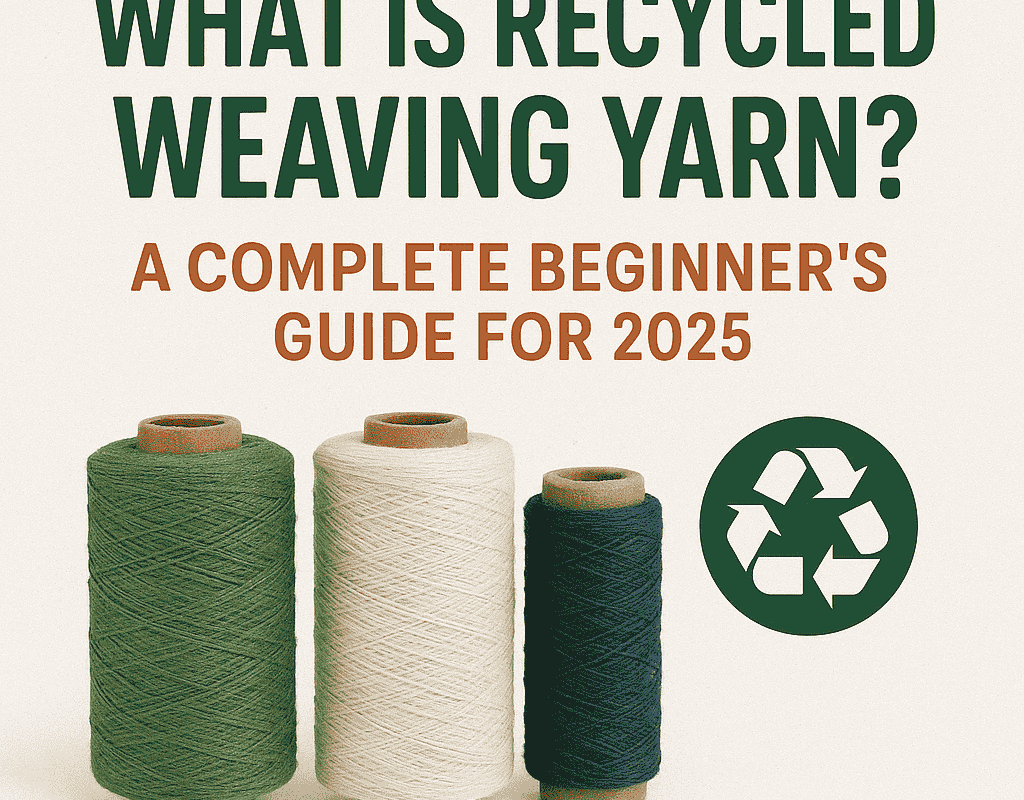
What Is Recycled Weaving Yarn? A Complete Beginner’s Guide for 2025
As the world shifts towards smarter, greener textile solutions, the popularity of Recycled Weaving Yarn has skyrocketed—especially among mills, fabric manufacturers, fashion brands, and sustainability-driven consumers. If you’re new to the concept and searching for a simple, beginner-friendly explanation, this guide breaks down everything you need to know in 2025.
What Is Recycled Weaving Yarn?
Recycled weaving yarn is yarn produced from post-consumer or post-industrial textile waste, plastic bottles, cutting scraps, PET waste, and leftover fiber materials. Instead of letting these materials end up in landfills or oceans, recycling mills collect, process, and spin them into new, high-quality yarns—perfect for weaving fabrics.
In short:
✔️ It reduces waste
✔️ It saves natural resources
✔️ It lowers energy consumption
✔️ It supports circular textiles
This makes recycled weaving yarn one of the fastest-growing eco-friendly yarn categories in 2025.
How Recycled Weaving Yarn Is Made
The recycling and spinning process is a combination of technology, precision, and quality control. Here’s how it works step-by-step:
1. Waste Collection
Manufacturers collect:
- Post-consumer garments
- Cutting waste from factories
- PET bottles (for polyester yarns)
- Discarded home textiles
- Industrial scraps
2. Sorting & Cleaning
Waste is segregated by:
- Fiber type
- Color
- Quality
- Contamination levels
This step ensures consistent yarn quality.
3. Shredding
Textiles are shredded into fiber form using high-speed mechanical shredders.
4. Fiber Opening
Fibers are opened, blended, and aligned to create a uniform texture.
5. Carding & Combing
These processes remove impurities and prepare the fiber into slivers for spinning.
6. Spinning into Yarn
Modern ring frames or open-end spinning machines convert fiber into smooth, strong yarn suitable for weaving.
7. Quality Testing
Every batch undergoes:
- Strength tests
- Evenness checks
- Color consistency checks
- Contamination analysis
8. Final Packaging
The yarn is wound into cones, bales, or customized packaging for mills and exporters.
Types of Recycled Weaving Yarn Available in 2025
The textile industry now offers multiple variants to match fabric needs:
1. Recycled Cotton Weaving Yarn
Made from cotton garment waste and industry scraps.
Ideal for: shirting fabrics, denim blends, bedsheets, towels, and upholstery.
2. Recycled Polyester Weaving Yarn (rPET)
Made from PET bottles and polyester waste.
Ideal for: performance fabrics, denim blends, bags, curtains, and technical textiles.
3. Recycled Cotton-Polyester Blended Yarn
A perfect balance of softness + strength.
Ideal for: home textiles, fashion fabrics, and value-added woven fabrics.
4. Recycled Acrylic & Wool Blends
Used in blankets, shawls, winter fabrics, and upholstery.
5. Color-Sorted Recycled Yarn
Produced without additional dyeing—reducing water usage by up to 90%.
Why Recycled Weaving Yarn Is in High Demand in 2025
The global textile industry is prioritizing sustainability more than ever. Here’s why Recycled Weaving Yarn has become essential:
1. It Reduces Textile Waste
Over 92 million tons of textile waste is generated each year globally. Recycling turns waste into usable raw material—reducing landfill pressure.
2. It Lowers Cost for Manufacturers
Recycled yarns often cost 20%–40% less than virgin yarn due to:
- Reduced raw material costs
- Less water and energy usage
- Eliminated dyeing in color-sorted yarns
3. It Saves Water & Energy
Recycling cotton saves up to:
- 85% water
- 60% energy
- 40% CO₂ emissions
This makes it a smart choice for eco-conscious brands.
4. It Supports Sustainable Certifications
Brands aim for:
- GRS (Global Recycled Standard)
- RCS
- OEKO-TEX
- IDFL certifications
Using recycled weaving yarn helps achieve these sustainability goals.
5. Consumer Demand Is Rising
Gen-Z and international fashion brands prefer products that:
- Reduce carbon footprint
- Use circular textile materials
- Follow ethical production
This trend boosts demand for recycled yarn every year.
Applications of Recycled Weaving Yarn
Recycled weaving yarn is extremely versatile and can be used in almost every textile category:
1. Home Textiles
- Bedsheets
- Pillow fabrics
- Curtains
- Blankets
- Table linens
- Upholstery
2. Fashion & Apparel
- Shirts
- Trousers
- Denim
- Jackets
- Ethnic wear
- Accessories
3. Industrial & Technical Textiles
- Interlinings
- Lining fabrics
- Geo-textiles
- Filtration fabrics
- Workwear
4. Eco-Friendly Product Manufacturing
- Bags
- Towels
- Rugs
- Handlooms
- Craft fabrics
In 2025, weaving mills globally are shifting their raw material sourcing toward recycled yarn due to cost advantages and sustainability benefits.
Advantages of Using Recycled Weaving Yarn
1. Cost-Effective
Budget-friendly for bulk manufacturers without compromising on fabric quality.
2. Eco-Friendly
Less water, less energy, and fewer chemicals.
3. Durable & Versatile
Modern recycling technology ensures high strength and evenness.
4. Reduced Carbon Footprint
Perfect for sustainable collections and green-certified products.
5. Available in Multiple Counts
From coarse denims to fine shirting, recycled yarns now support a wide variety of weaving counts.
Challenges in Recycled Weaving Yarn (And How Mills Are Solving Them)
1. Fiber Length Variation
Recycling may shorten fibers.
Solution: Advanced carding & combing systems generate uniform fibers.
2. Color Variation
Especially in color-sorted yarn.
Solution: AI-based color sorting & blending.
3. Contamination
Plastic, metal, and micro-waste can enter during shredding.
Solution: Automated contamination detection systems.
4. Limited Availability of Premium Waste
High global demand is increasing raw material scarcity.
Solution: More collection points and post-consumer garment recycling programs.
In 2025, spinning mills using advanced machinery have largely overcome these issues.
How to Choose the Best Recycled Weaving Yarn in 2025
If you’re sourcing recycled weaving yarn, consider:
✔️ Count range (Ne or Denier)
✔️ Fiber composition (cotton, polyester, blends)
✔️ Certifications (GRS, RCS, IDFL)
✔️ Color consistency
✔️ Yarn strength & evenness
✔️ Application suitability (home textiles, apparel, industrial use)
✔️ Manufacturer reputation
Choosing a trusted spinning mill ensures better and consistent output for weaving.
The Future of Recycled Weaving Yarn
2025 marks a major shift in global textile sourcing. Recycled weaving yarn is no longer an optional trend—it is becoming a global manufacturing standard.
Future innovations include:
- AI-based waste sorting
- Zero-dye yarn production
- Fully circular textile-to-textile systems
- Biodegradable recycled blends
- Higher-strength recycled fibers for technical textiles
The industry is moving toward 100% recyclable and reusable textiles, and recycled weaving yarn is leading this transformation.
Conclusion
Recycled weaving yarn is a powerful solution for reducing waste, lowering production costs, and supporting sustainable textile manufacturing. As we move into 2025 and beyond, brands, mills, exporters, and buyers are increasingly prioritizing recycled materials due to their environmental and economic benefits.
If you’re beginning your journey into eco-friendly textile manufacturing, recycled weaving yarn is the perfect place to start.