The fashion and textile industry is one of the largest contributors to global waste and pollution. From fast fashion’s rapid turnover to excessive production of synthetic fibers, the environmental impact is undeniable. However, one solution is gaining momentum and transforming the way fabrics are made, through Recycled Yarn Manufacturing.
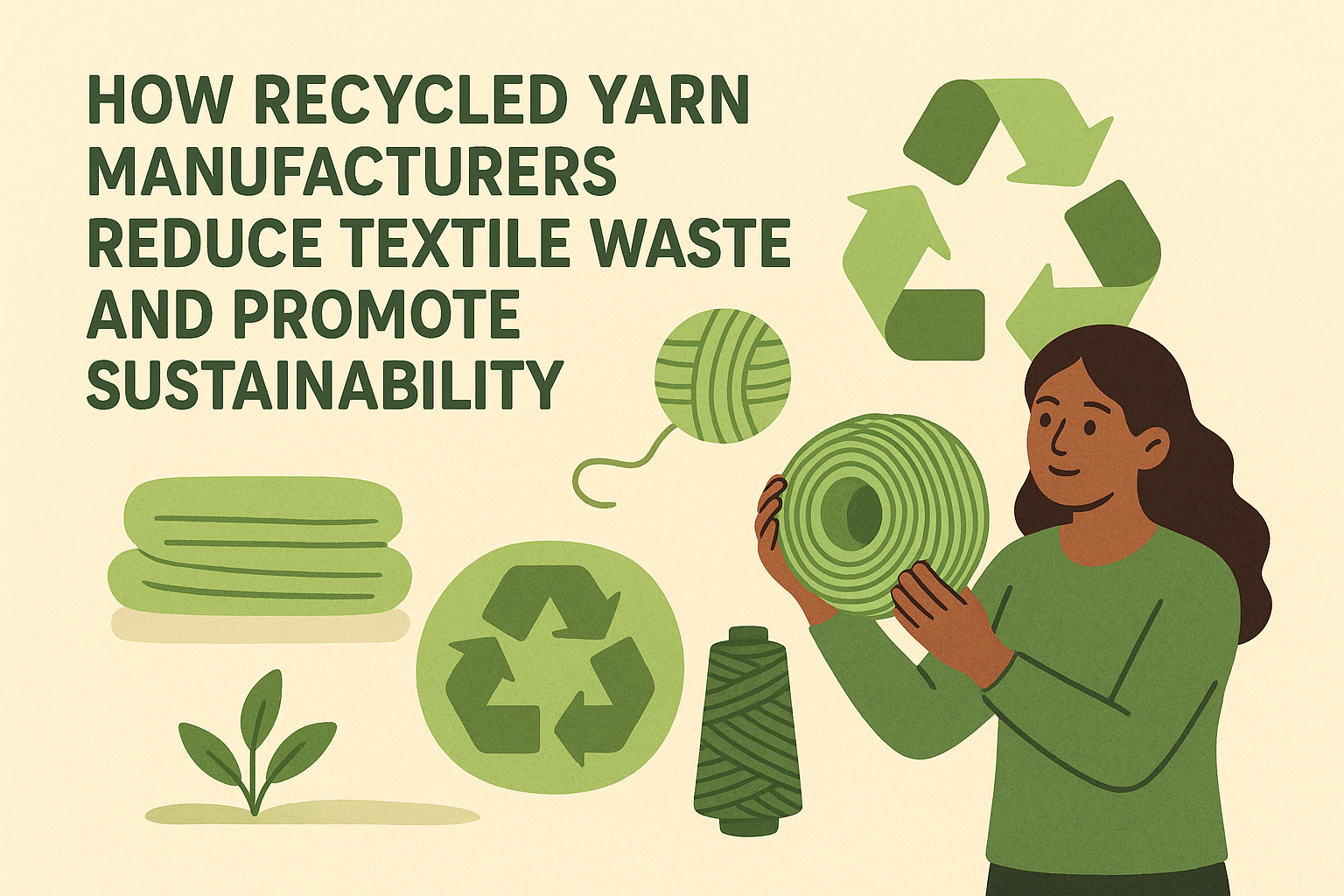
Recycled yarn manufacturers are not only giving new life to discarded materials but also playing a critical role in reducing textile waste and promoting sustainability. By rethinking raw material sourcing, production processes, and waste management, they’re helping create a more circular, eco-friendly fashion ecosystem.
1. Understanding Recycled Yarn
Recycled yarn is produced from post-consumer and pre-consumer textile waste, as well as other recycled materials such as PET bottles.
- Post-consumer waste: Old clothes, household textiles, or any fabric discarded after use.
- Pre-consumer waste: Production offcuts, unsold inventory, and defective fabric rolls from manufacturing facilities.
Instead of these materials ending up in landfills or being incinerated, recycled yarn manufacturers collect, process, and convert them into usable fibers, which are then spun into new yarn.
2. The Process: From Waste to New Yarn
The manufacturing of recycled yarn involves several eco-conscious steps:
- Collection & Sorting – Textile waste is gathered from factories, retailers, and recycling centers. It is sorted based on fiber type, color, and quality.
- Shredding – Fabrics are mechanically shredded into smaller fiber pieces.
- Cleaning – Fibers are washed to remove contaminants like dust, dyes, or chemicals.
- Blending – Recycled fibers may be blended with virgin fibers for improved strength and texture.
- Spinning – The cleaned fibers are spun into yarn, ready for knitting or weaving.
This process bypasses many resource-heavy steps involved in producing virgin fibers, significantly cutting down environmental impact.
3. Reducing Textile Waste
One of the most significant contributions of recycled yarn manufacturers is diverting waste from landfills. According to the Ellen MacArthur Foundation, the equivalent of one garbage truck of textiles is landfilled or burned every second worldwide.
By reprocessing old fabrics into yarn, manufacturers help:
- Extend the life of materials that would otherwise go to waste.
- Minimize landfill accumulation, which reduces methane emissions from decomposing textiles.
Encourage circularity, where materials are continuously reused rather than discarded.
4. Promoting Sustainability Through Resource Conservation
Recycled yarn manufacturing is far less resource-intensive than producing new fibers.
- Water Savings: Cotton production consumes huge amounts of water—recycling cotton fibers eliminates much of this demand.
- Energy Reduction: Processing existing fibers uses less energy compared to manufacturing new polyester or other synthetics from raw petroleum.
- Lower Carbon Footprint: Recycling reduces greenhouse gas emissions by avoiding virgin fiber production processes.
This conservation of natural resources makes recycled yarn an essential part of sustainable textile manufacturing.
5. Meeting Consumer Demand for Eco-Friendly Fashion
Today’s shoppers are more environmentally conscious than ever. They want brands that align with their values, and recycled yarn offers a compelling story.
Fashion labels using recycled yarn can proudly highlight:
- Transparency in sourcing – clear traceability of recycled materials.
- Lower environmental impact – backed by measurable data like water and energy savings.
- Certifications – such as Global Recycled Standard (GRS) or OEKO-TEX, proving sustainable practices.
This not only boosts brand reputation but also fosters long-term customer loyalty.
6. Challenges and Solutions
While recycled yarn production offers numerous benefits, it also faces certain challenges:
- Fiber Quality – Recycled fibers can be shorter and less durable. Solution: Blending with virgin fibers and improving mechanical/chemical recycling techniques.
- Color Limitations – Pre-colored fibers can limit dyeing options. Solution: Advanced color-sorting technology and innovative dyeing methods.
- Sorting Complexity – Mixed-fiber fabrics are harder to recycle. Solution: AI-driven fiber identification systems to improve sorting accuracy.
As technology advances, these challenges are becoming easier to overcome, making recycled yarn production more efficient and scalable.
7. Driving a Circular Fashion Economy
Recycled yarn manufacturing aligns perfectly with the circular economy—a system where products are designed, used, and recycled in a continuous loop.
Instead of a linear “take-make-dispose” model, circular fashion promotes designing for recyclability, ensuring that today’s clothes can become tomorrow’s raw materials. Recycled Yarn Manufacturers are key players in making this vision a reality.
Conclusion
Recycled Yarn Manufacturers are doing more than producing eco-friendly fibers—they’re reshaping the future of fashion. By reducing textile waste, conserving resources, and promoting sustainable practices, they help close the loop on fabric production.
As awareness grows and technology advances, recycled yarn will become a cornerstone of the textile industry. For fashion brands, adopting recycled yarn is no longer just a trend—it’s a responsibility. And for consumers, choosing products made from recycled yarn is a small but powerful step toward a cleaner, greener planet.