Why Brands Are Switching to Recycled Weaving Yarn: Trends & Insights 2025

Why Brands Are Switching to Recycled Weaving Yarn: Trends & Insights 2025

Why Brands Are Switching to Recycled Weaving Yarn: Trends & Insights 2025

The shift toward Recycled Weaving Yarn is no longer a niche sustainability experiment — in 2025 it’s a strategic business decision for many brands. From headline corporate commitments to quieter supply-chain investments, the textile value chain is reorganizing around circular feedstocks. This post explores the forces driving brands to switch, the technologies and economics enabling adoption, and what to expect next.

Why the switch is accelerating now

Brands face a rare convergence of pressure and opportunity. Regulators and NGO campaigns are tightening the spotlight on plastic and textile waste, and large industry initiatives have set ambitious recycled-content targets that push buyers to change suppliers or materials. Textile Exchange’s 2025 Recycled Polyester Challenge — which asks companies to commit to substantially raise their recycled polyester use by 2025 — has been a major accelerant, prompting many brands to convert lofty sustainability goals into procurement plans.

At the same time, market economics are shifting. Demand for recycled yarns is growing fast enough that production scale is improving and specialized recycled feedstocks are becoming commercially available, shrinking the price gap with some virgin materials. Market analyses show the recycled yarn segment expanding strongly as both manufacturers and brands chase predictable, certified recycled inputs.

Practical drivers for brand adoption

  1. Targeted corporate commitments — Major brands increasingly publish specific recycled-content targets or sign industry compacts. These commitments create purchase volume, which helps recyclers and yarn mills justify investment in new equipment and processes.
  2. Consumer expectations — The sustainable-purchase cohort now demands traceability and real recycled content, not vague “eco” claims. Brands that advertise verified recycled content gain market differentiation and reduce reputational risk.
  3. Supply-chain resilience — Recycled feedstocks can help diversify raw material sources and reduce exposure to petrochemical price shocks or cotton shortages, improving long-term sourcing resilience.

Technology and process advances enabling quality parity

Two technical pathways dominate recycled yarn production today: mechanical recycling and chemical (or feedstock) recycling. Mechanical recycling — shredding and re-spinning textile waste — has matured to deliver usable yarns for many woven applications, particularly when blended with virgin fiber to regain strength and hand. Chemical recycling breaks polymers down to monomers and rebuilds them, producing material much closer to virgin polyester and opening the door for higher-quality, closed-loop textile-to-textile recycling. Ongoing lab and pilot work (including solvent-assisted separations for polyblend textiles) are improving yields and broadening which waste streams can be recycled into premium yarns.

Real-world examples: brand partnerships and offtake deals

We’re seeing concrete commercial arrangements rather than just press releases. Fashion brands are signing multi-year offtake and supply deals with chemical-recycling startups and experienced recyclers, committing to purchase next-generation recycled polymers and yarns for upcoming collections. These partnerships demonstrate the confidence brands have in recycled solutions to meet quality, volume, and timing needs — and they give recyclers the revenue certainty to scale. A notable example in recent industry coverage: brands entering multi-year agreements to secure recycled polyester made from post-consumer textile waste.

Economics: cost, certification, and total value

Cost remains nuanced. For some product categories and regions recycled yarns are already cost-competitive; in others they carry a premium that brands must absorb or pass to consumers. Importantly, brands aren’t only paying for raw material: they’re buying verified sustainability, reduced scope-3 emissions, and brand goodwill. Certification schemes (e.g., GRS/RCS and other chain-of-custody programs) play a major role in turning recycled inputs into credible marketing claims — and in many cases, certified recycled content is what buyers will pay extra for.

Design and manufacturing implications

Switching to recycled weaving yarn requires changes across product development and mill operations. Designers must understand the character of recycled yarns (e.g., subtle heathering, fiber shortness) and specify blends and finishes that preserve desired drape and strength. Mills often pilot small-batch runs to optimize spin-twist, finishing, and weaving settings for recycled counts. Brands that invest up front — in technical support, sampling, and flexible specs — avoid disappointing product launches and accelerate scale.

Risks and how brands mitigate them
• Feedstock variability — Post-consumer textile streams can vary; better collection schemes and stricter input sorting reduce contamination.
• Greenwashing risk — Transparent traceability, third-party certification, and honest marketing are essential to maintain consumer trust.
• Performance gaps — For high-performance or technical textiles, brands may still need virgin or engineered fibers; strategic blending and targeted use cases solve many of these challenges.

What 2025 showed us — and what’s next

2025 has been a year of scaling pilots into production. Investment headlines, new recycling plants, R&D breakthroughs, and a steady stream of brand–recycler partnerships mean Recycled Weaving Yarn is moving from experimental to mainstream for many fabric categories. Market forecasts and industry roundups point to continued growth in recycled yarn demand and ongoing investment across mechanical and chemical recycling routes.

For brands considering the switch: a short action checklist
• Set measurable recycled-content targets and align them with procurement. (Industry compacts can help.)
• Source certified recycled yarns where possible and require chain-of-custody documentation.
• Start with blended constructions and proven applications (e.g., casualwear, home textiles) before moving into technical lines.
• Partner with recyclers and mills on pilots to co-develop specifications and volume forecasts.
• Communicate transparently with consumers — explain tradeoffs and the benefits clearly to avoid confusion or skepticism.

Final thought
Recycled weaving yarn is transforming how fabrics are made by aligning environmental goals with practical manufacturing solutions. In 2025 the transition is being driven by credible targets, technological advances, and market demand. For brands, switching to recycled yarn is no longer just an ethical statement — it’s a way to future-proof product lines, meet regulatory and consumer expectations, and participate in a circular textile economy. The momentum is real, but the journey requires investment, patience, and openness to new design and sourcing approaches. Those who lead now will have both the supply relationships and the authenticity advantage as circular textiles move from trend to standard.

How Recycled Weaving Yarn Is Transforming Sustainable Fabric Manufacturing

How Recycled Weaving Yarn Is Transforming Sustainable Fabric Manufacturing

How Recycled Weaving Yarn Is Transforming Sustainable Fabric Manufacturing

The textile industry is at a crossroads. Traditional manufacturing has long relied on virgin fibers and resource-intensive processes that contribute heavily to water use, energy consumption, and waste. Enter recycled weaving yarn — a practical, scalable solution that’s reshaping how fabrics are made, marketed, and valued. From diverting textile waste from landfills to lowering carbon footprints and unlocking new design possibilities, recycled weaving yarn is not just a green label: it’s a manufacturing revolution.

What is Recycled Weaving Yarn?

Recycled weaving yarn is yarn produced from reclaimed fibers rather than newly spun virgin fiber. Sources include post-consumer garments, industrial fabric offcuts, and pre-consumer textile waste. These materials are collected, sorted, cleaned, mechanically or chemically processed back into fibers, and then re-spun into yarns suitable for weaving. The end products can range from coarse utilitarian textiles to fine fabrics for apparel and home textiles, depending on the source material and processing technique.

Environmental benefits — immediate and measurable

One of the strongest arguments for recycled yarn is its environmental impact. Producing yarn from recycled fibers typically consumes far less water and energy than producing the same yarn from virgin synthetic or natural fibers. For example, mechanical recycling avoids water-heavy processes used in some virgin fiber manufacturing and reduces dependence on petrochemicals when recycling synthetic fibers like PET.

Recycling also tackles waste head-on. Millions of tons of textiles are landfilled or incinerated annually. By creating value from discarded clothing and fabric scraps, recycled yarn diverts waste streams, reduces landfill burden, and decreases greenhouse gas emissions associated with decomposition or incineration.

Beyond resource savings, recycled yarn encourages circular thinking — designing products and supply chains so materials remain in use for as long as possible. This shift from linear “take-make-dispose” models toward circular systems is essential for the long-term sustainability of textile manufacturing.

Quality and performance — myths busted

There’s a persistent myth that recycled yarns are inferior in quality. Modern recycling technologies and improved sorting systems have made it possible to produce recycled yarns with consistent, high performance. Mechanical recycling preserves a lot of the original fiber characteristics when carefully processed; chemical recycling (when applied responsibly) can regenerate fibers that closely resemble virgin material.

Blending recycled fibers with virgin fibers is a smart, common approach to achieve desired strength, hand, and drape. In woven fabrics, recycled yarns perform exceptionally well when engineered to the application — from durable upholstery textiles to breathable apparel fabrics. Manufacturers can also tune yarn counts, twists, and finishing processes to match legacy specifications.

Economic incentives for manufacturers

Using recycled weaving yarn can make strong business sense. For many mills, recycled yarns lower material costs — especially when recycled feedstock is sourced as a byproduct or through partnerships with waste management firms. Recycled yarns also open new markets: eco-conscious brands and consumers increasingly prefer products with recycled content, and many retailers now require sustainability credentials from suppliers.

Additionally, regulatory and corporate pressure for sustainability reporting and reduced Scope 3 emissions is incentivizing brands to source recycled materials. Producers who build capabilities in recycled yarns position themselves as strategic partners to buyers with sustainability targets, turning environmental stewardship into a competitive advantage.

Innovations driving adoption

Several technical and logistical innovations are accelerating recycled yarn adoption:

• Improved fiber sorting and automated pre-processing reduce contamination and raise the quality of recycled feedstock.
• Advances in chemical recycling enable PET and other synthetics to be broken down and rebuilt into high-quality polymers.
• Hybrid spinning and blending techniques allow recycled fibers to be combined with virgin fibers in controlled ratios for predictable performance.
• Traceability technologies — like blockchain and digital tagging — enable brands to verify recycled content and communicate authentic claims to consumers.

These developments lower barriers for large-scale manufacturing and give designers more confidence when specifying recycled yarns in woven constructions.

Design opportunities and consumer appeal

Recycled Weaving Yarn isn’t only about sustainability; it’s also inspiring new aesthetics. Recycled fibers often exhibit unique texture and tonal variations, which designers can use to create fabrics with character and storytelling potential. From heathered suiting cloths to textured home textiles, recycled yarns allow brands to differentiate through both ethics and design.

Consumers increasingly value transparency and authenticity. Fabrics made with recycled yarn carry a story — of resourcefulness and reduced environmental impact — that resonates with the modern buyer. Clear labeling and third-party certifications help translate that story into purchase decisions.

Challenges to scale — and how to address them

Despite the momentum, several challenges remain:

• Feedstock variability: Post-consumer textiles are a mixed bag. Better collection systems, take-back programs, and standardized sorting can help.
• Cost and investment: Upgrading mills for recycled processing requires capital. Collaborative financing models and public incentives can lower the barrier.
• Performance tradeoffs: Some high-performance applications still need virgin fibers; strategic blending and targeted applications can bridge gaps.
• Greenwashing risk: Transparent supply chains, certifications, and traceable documentation are essential to avoid misleading claims.

Addressing these obstacles requires coordinated effort across the value chain — from collection and recycling infrastructure to mill capabilities and brand commitments.

Practical steps for manufacturers and brands

To integrate recycled weaving yarn effectively, manufacturers and brands can follow practical steps:

  1. Audit material streams to identify potential recycled feedstock sources.
  2. Invest in or partner for sorting and pre-processing capability.
  3. Pilot blended yarns for different fabric applications to refine processes.
  4. Obtain recognized certifications (e.g., GRS, RCS) and implement traceability for credibility.
  5. Educate designers and customers on benefits and best uses of recycled yarns.

The future looks woven from reuse

Recycled weaving yarn is more than a niche; it’s a scalable lever for transforming textile production into a more sustainable, resilient industry. With supportive policies, continued technological progress, and honest communication, recycled yarn can reduce environmental harm while delivering attractive, high-performing fabrics for fashion, interiors, and industrial uses.

For mills and brands, the imperative is clear: embed recycling into product design and supply chains now. Doing so not only addresses immediate environmental challenges but also aligns businesses with the expectations of conscious consumers and the realities of a resource-constrained future. In short, recycled weaving yarn is helping the textile industry remake itself — one warp and weft at a time.

What Is Recycled Weaving Yarn? A Complete Beginner’s Guide for 2025

What Is Recycled Weaving Yarn? A Complete Beginner’s Guide for 2025

As the world shifts towards smarter, greener textile solutions, the popularity of Recycled Weaving Yarn has skyrocketed—especially among mills, fabric manufacturers, fashion brands, and sustainability-driven consumers. If you’re new to the concept and searching for a simple, beginner-friendly explanation, this guide breaks down everything you need to know in 2025.

What Is Recycled Weaving Yarn?

Recycled weaving yarn is yarn produced from post-consumer or post-industrial textile waste, plastic bottles, cutting scraps, PET waste, and leftover fiber materials. Instead of letting these materials end up in landfills or oceans, recycling mills collect, process, and spin them into new, high-quality yarns—perfect for weaving fabrics.

In short:

✔️ It reduces waste
✔️ It saves natural resources
✔️ It lowers energy consumption
✔️ It supports circular textiles

This makes recycled weaving yarn one of the fastest-growing eco-friendly yarn categories in 2025.

How Recycled Weaving Yarn Is Made

The recycling and spinning process is a combination of technology, precision, and quality control. Here’s how it works step-by-step:

1. Waste Collection

Manufacturers collect:

  • Post-consumer garments
  • Cutting waste from factories
  • PET bottles (for polyester yarns)
  • Discarded home textiles
  • Industrial scraps

2. Sorting & Cleaning

Waste is segregated by:

  • Fiber type
  • Color
  • Quality
  • Contamination levels

This step ensures consistent yarn quality.

3. Shredding

Textiles are shredded into fiber form using high-speed mechanical shredders.

4. Fiber Opening

Fibers are opened, blended, and aligned to create a uniform texture.

5. Carding & Combing

These processes remove impurities and prepare the fiber into slivers for spinning.

6. Spinning into Yarn

Modern ring frames or open-end spinning machines convert fiber into smooth, strong yarn suitable for weaving.

7. Quality Testing

Every batch undergoes:

  • Strength tests
  • Evenness checks
  • Color consistency checks
  • Contamination analysis

8. Final Packaging

The yarn is wound into cones, bales, or customized packaging for mills and exporters.

Types of Recycled Weaving Yarn Available in 2025

The textile industry now offers multiple variants to match fabric needs:

1. Recycled Cotton Weaving Yarn

Made from cotton garment waste and industry scraps.
Ideal for: shirting fabrics, denim blends, bedsheets, towels, and upholstery.

2. Recycled Polyester Weaving Yarn (rPET)

Made from PET bottles and polyester waste.
Ideal for: performance fabrics, denim blends, bags, curtains, and technical textiles.

3. Recycled Cotton-Polyester Blended Yarn

A perfect balance of softness + strength.
Ideal for: home textiles, fashion fabrics, and value-added woven fabrics.

4. Recycled Acrylic & Wool Blends

Used in blankets, shawls, winter fabrics, and upholstery.

5. Color-Sorted Recycled Yarn

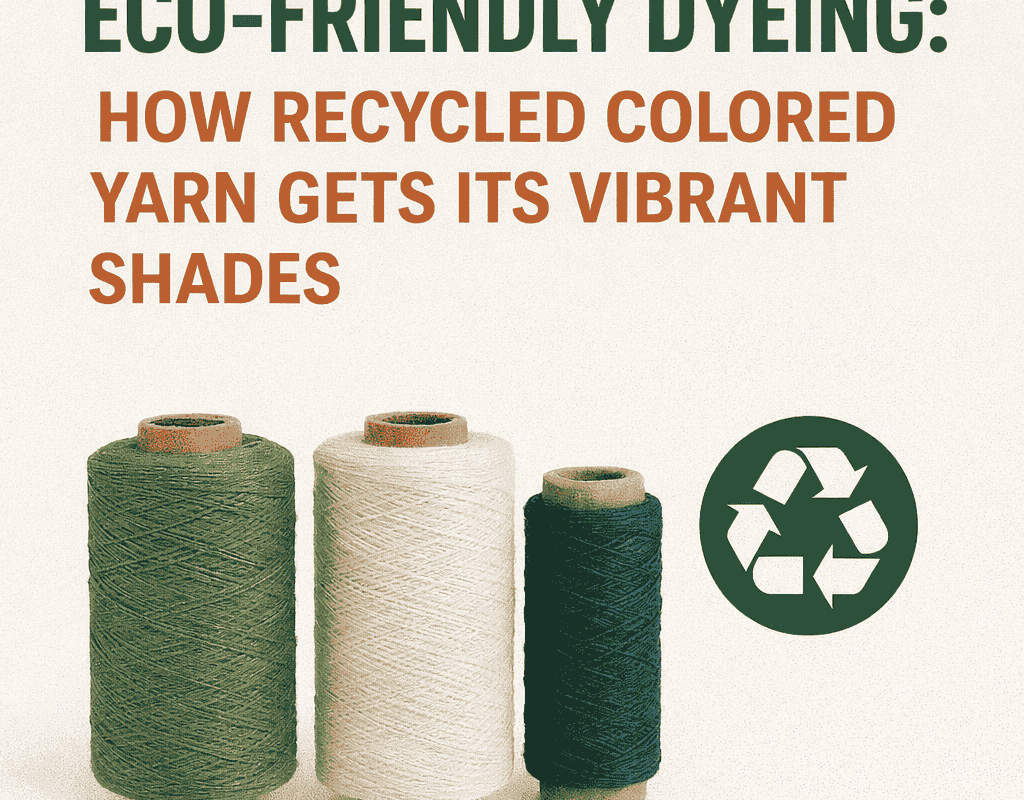
Produced without additional dyeing—reducing water usage by up to 90%.

Why Recycled Weaving Yarn Is in High Demand in 2025

The global textile industry is prioritizing sustainability more than ever. Here’s why Recycled Weaving Yarn has become essential:

1. It Reduces Textile Waste

Over 92 million tons of textile waste is generated each year globally. Recycling turns waste into usable raw material—reducing landfill pressure.

2. It Lowers Cost for Manufacturers

Recycled yarns often cost 20%–40% less than virgin yarn due to:

  • Reduced raw material costs
  • Less water and energy usage
  • Eliminated dyeing in color-sorted yarns

3. It Saves Water & Energy

Recycling cotton saves up to:

  • 85% water
  • 60% energy
  • 40% CO₂ emissions

This makes it a smart choice for eco-conscious brands.

4. It Supports Sustainable Certifications

Brands aim for:

  • GRS (Global Recycled Standard)
  • RCS
  • OEKO-TEX
  • IDFL certifications

Using recycled weaving yarn helps achieve these sustainability goals.

5. Consumer Demand Is Rising

Gen-Z and international fashion brands prefer products that:

  • Reduce carbon footprint
  • Use circular textile materials
  • Follow ethical production

This trend boosts demand for recycled yarn every year.

Applications of Recycled Weaving Yarn

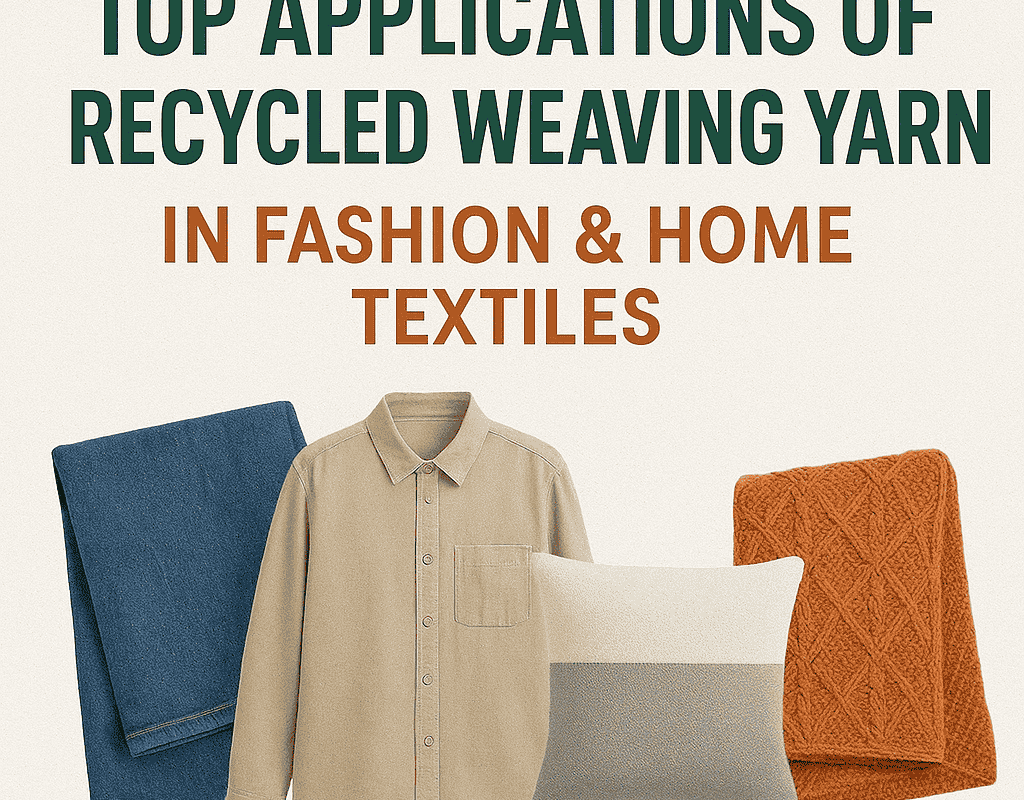
Recycled weaving yarn is extremely versatile and can be used in almost every textile category:

1. Home Textiles

  • Bedsheets
  • Pillow fabrics
  • Curtains
  • Blankets
  • Table linens
  • Upholstery

2. Fashion & Apparel

  • Shirts
  • Trousers
  • Denim
  • Jackets
  • Ethnic wear
  • Accessories

3. Industrial & Technical Textiles

  • Interlinings
  • Lining fabrics
  • Geo-textiles
  • Filtration fabrics
  • Workwear

4. Eco-Friendly Product Manufacturing

  • Bags
  • Towels
  • Rugs
  • Handlooms
  • Craft fabrics

In 2025, weaving mills globally are shifting their raw material sourcing toward recycled yarn due to cost advantages and sustainability benefits.

Advantages of Using Recycled Weaving Yarn

1. Cost-Effective

Budget-friendly for bulk manufacturers without compromising on fabric quality.

2. Eco-Friendly

Less water, less energy, and fewer chemicals.

3. Durable & Versatile

Modern recycling technology ensures high strength and evenness.

4. Reduced Carbon Footprint

Perfect for sustainable collections and green-certified products.

5. Available in Multiple Counts

From coarse denims to fine shirting, recycled yarns now support a wide variety of weaving counts.

Challenges in Recycled Weaving Yarn (And How Mills Are Solving Them)

1. Fiber Length Variation

Recycling may shorten fibers.
Solution: Advanced carding & combing systems generate uniform fibers.

2. Color Variation

Especially in color-sorted yarn.
Solution: AI-based color sorting & blending.

3. Contamination

Plastic, metal, and micro-waste can enter during shredding.
Solution: Automated contamination detection systems.

4. Limited Availability of Premium Waste

High global demand is increasing raw material scarcity.
Solution: More collection points and post-consumer garment recycling programs.

In 2025, spinning mills using advanced machinery have largely overcome these issues.

How to Choose the Best Recycled Weaving Yarn in 2025

If you’re sourcing recycled weaving yarn, consider:

✔️ Count range (Ne or Denier)
✔️ Fiber composition (cotton, polyester, blends)
✔️ Certifications (GRS, RCS, IDFL)
✔️ Color consistency
✔️ Yarn strength & evenness
✔️ Application suitability (home textiles, apparel, industrial use)
✔️ Manufacturer reputation

Choosing a trusted spinning mill ensures better and consistent output for weaving.

The Future of Recycled Weaving Yarn

2025 marks a major shift in global textile sourcing. Recycled weaving yarn is no longer an optional trend—it is becoming a global manufacturing standard.

Future innovations include:

  • AI-based waste sorting
  • Zero-dye yarn production
  • Fully circular textile-to-textile systems
  • Biodegradable recycled blends
  • Higher-strength recycled fibers for technical textiles

The industry is moving toward 100% recyclable and reusable textiles, and recycled weaving yarn is leading this transformation.

Conclusion

Recycled weaving yarn is a powerful solution for reducing waste, lowering production costs, and supporting sustainable textile manufacturing. As we move into 2025 and beyond, brands, mills, exporters, and buyers are increasingly prioritizing recycled materials due to their environmental and economic benefits.

If you’re beginning your journey into eco-friendly textile manufacturing, recycled weaving yarn is the perfect place to start.

Recycled Yarn Fabrics

How Recycled Yarn Fabrics Manufacturers Are Transforming the Textile Industry

How Recycled Yarn Fabrics Manufacturers Are Transforming the Textile Industry

A 2025 Sustainability & Innovation Insight

By KS Spinning Mills

The global textile industry is undergoing a major shift—one defined by sustainability, circular production, and environmentally conscious innovation. At the center of this transformation stands the surge in Recycled Yarn Fabrics. Today’s leading recycled yarn fabrics manufacturers are not merely producing yarn; they are redefining how the world thinks about waste, resources, and textile production.

Among these changemakers, KS Spinning Mills has emerged as a front-running force, pushing the boundaries of innovation and proving that sustainability and performance can coexist without compromise.

Why the Textile World Is Turning to Recycled Yarn

The textile industry has long faced criticism for pollution, water consumption, and excessive waste. But the tide has shifted. In 2025, brands, governments, and consumers are collectively demanding sustainable alternatives—and recycled yarn fabrics have become a powerful solution.

Here’s why recycled yarn is reshaping the industry:

1. A Massive Reduction in Waste

Every year, millions of tons of cotton, polyester, and garment waste end up in landfills. Recycled yarn manufacturers convert this waste into usable, high-quality yarn—cutting down landfill load and extending the lifecycle of textile materials.

2. Much Lower Environmental Impact

Producing new (virgin) fiber requires huge amounts of water, energy, and chemicals. In contrast, recycled yarn production uses significantly less resources—making it one of the most environmentally efficient methods of textile manufacturing.

3. Rising Consumer Demand for Sustainable Clothing

Consumers, especially the younger generation, want transparency. They want brands that care about the planet—and recycled yarn fabrics are a simple, effective way for brands to meet that expectation.

4. Global Regulations Pushing Companies to Go Green

International markets now require brands to comply with environmental standards. Using recycled materials helps companies meet global compliance norms with ease.

The New Era of Recycled Yarn: Innovation Meets Responsibility

Recycling yarn is no longer just about shredding old fabric and spinning new yarn. Modern Recycled Yarn Fabrics Manufacturers use advanced technologies to produce yarns with strength, softness, and durability comparable to virgin fiber.

Let’s explore the innovations transforming the industry.

1. Technology-Driven Segregation & Sorting

Today’s manufacturers use:

  • Automated fiber separation machines
  • Color-coded waste sorting systems
  • AI-powered quality inspection tools

This ensures that recycled fibers match quality standards required for exports and premium fabrics.

KS Spinning Mills uses advanced sorting technologies to maintain color consistency and fiber purity, resulting in uniform, reliable recycled yarn ideal for weaving and knitting applications.

2. Blending for Strength, Comfort & Versatility

One of the biggest advancements is fiber blending.
Manufacturers blend:

  • Recycled cotton
  • Recycled polyester
  • Recycled acrylic
  • Viscose
  • Elastane
  • Organic cotton

This produces yarns that offer a perfect balance of strength, elasticity, and comfort.

KS Spinning Mills is known for its custom blends that are ideal for:

  • T-shirts
  • Sweaters
  • Towels
  • Rugs
  • Blankets
  • Upholstery fabrics
  • Home textiles

This flexibility makes recycled yarn suitable for diverse industries across the world.

3. Pre-Dyed Recycled Yarn: Zero Chemical Waste

Another innovation that is revolutionizing textile production is pre-dyed recycled yarn.

Since waste fabrics are already colored, manufacturers reuse these fibers without needing additional dyeing.
This saves:

  • 1000s of liters of water
  • Chemical usage
  • Time and energy

KS Spinning Mills specializes in producing pre-dyed recycled yarn, making it one of the most eco-friendly options for fabric manufacturers.

4. Improved Spinning Technologies for Performance

Modern OE (Open-End) and Ring Spinning machines have allowed recycled yarn manufacturers to produce yarn that is smoother, stronger, and more consistent.

KS Spinning Mills uses:

  • High-speed spinning frames
  • Advanced rotor systems
  • Precision contamination removal systems

These technologies improve yarn uniformity and reduce breakage—ensuring that the yarn performs well during weaving, knitting, and garment production.

5. Certifications That Guarantee Authentic Sustainability

In 2025, global buyers demand certified sustainable products. Top-tier recycled yarn fabrics manufacturers follow international standards like:

  • GRS – Global Recycled Standard
  • OEKO-TEX
  • ISO Quality Systems
  • Traceability Compliance Standards

KS Spinning Mills adheres to globally recognized certification systems—giving customers complete confidence in sustainability, quality, and traceability.

How Recycled Yarn Manufacturers Are Changing the Market Landscape

With sustainability at the forefront, recycled yarn has disrupted the textile industry in ways that were unimaginable a decade ago. Here’s how:

1. Circular Fashion Is Becoming the New Standard

The traditional textile model was linear:
Produce → Use → Throw Away

But today, the model is circular:
Produce → Use → Recycle → Reuse

Recycled yarn manufacturers are the backbone of this circular economy. They ensure that textile waste re-enters the supply chain instead of harming the planet.

2. Cost-Effective Manufacturing Without Compromising Quality

Recycling helps reduce raw material costs. This cost advantage benefits:

  • Small garment units
  • Export houses
  • Home furnishing manufacturers
  • Larger multinational brands

KS Spinning Mills helps its partners reduce manufacturing costs while offering high-quality, reliable recycled yarn at scalable volumes.

3. Global Brands Are Partnering with Indian Manufacturers

India has become a global hub for recycled yarn due to:

  • Advanced technology
  • Skilled labor
  • Large-scale textile waste availability
  • Strong export infrastructure

KS Spinning Mills is one of the manufacturers consistently supplying to global buyers who want sustainable yet premium yarn options.

4. The Home Textiles Sector Is Booming

Recycled yarn is perfect for:

  • Carpets
  • Rugs
  • Throws
  • Blankets
  • Cushion fabrics
  • Upholstery

Manufacturers like KS Spinning Mills play a major role in supporting India’s home textile export growth by supplying durable, high-strength yarns.

5. Eco-Friendly Practices Are Becoming Brand Identity

Brands are increasingly using recycled yarn as a way to market sustainability.
Labels like:

  • “Made from Recycled Yarn”
  • “Sustainable Fabrics”
  • “GRS-Certified Recycling”

…help brands win trust and sell products faster.

KS Spinning Mills provides complete documentation and traceability support to help brands market their eco-friendly initiatives with authenticity.

Why KS Spinning Mills Leads the Transformation

With its unwavering commitment to sustainability, quality, and innovation, KS Spinning Mills stands out as one of India’s most trusted recycled yarn fabrics manufacturers.

What sets KS Spinning Mills apart?

✔️ Advanced recycling & spinning technology
✔️ High-quality color-sorted recycled yarn
✔️ Ability to produce bulk export quantities
✔️ Customized blends for every industry
✔️ Certified sustainable production processes
✔️ Strong global supply chain capabilities

From home textiles to fashion garments, KS Spinning Mills delivers products that meet the demands of today’s eco-conscious market.

Final Thoughts

The textile industry is changing—and changing fast. Recycled yarn is no longer an option; it is a necessity for brands that want to thrive in a sustainable world. Thanks to innovative recycled yarn fabrics manufacturers like KS Spinning Mills, the industry is moving toward a cleaner, smarter, and more responsible future.

By choosing recycled yarn fabrics, brands not only reduce environmental impact but also move towards a truly circular economy—one where every thread tells a story of renewal and responsibility.